
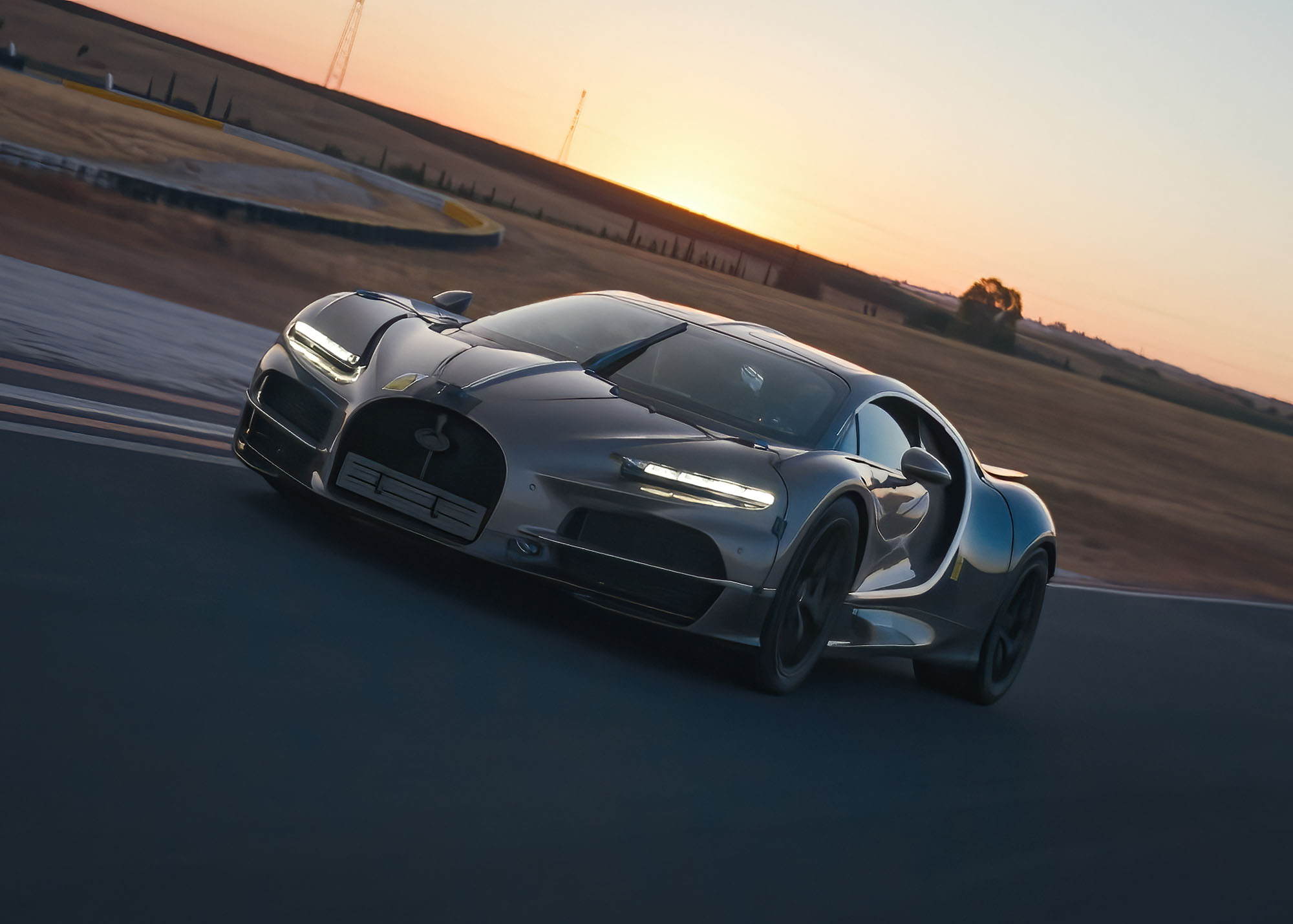

Bugatti has completed a major phase of hot-weather validation for the Tourbillon, subjecting its 1,800-horsepower V16 hybrid hypercar to extreme temperatures on public roads and a racetrack near Seville, Spain.
The testing program evaluated the Tourbillon’s cooling systems, cabin climate control and critical mechanical components under ambient temperatures exceeding 40°C (104°F). Bugatti reports that the targeted systems were successfully validated, marking another step toward completing the hypercar’s development. The latest testing is documented in Bugatti’s A New Era documentary series and follows earlier extreme-weather programs in Dubai and northern Sweden.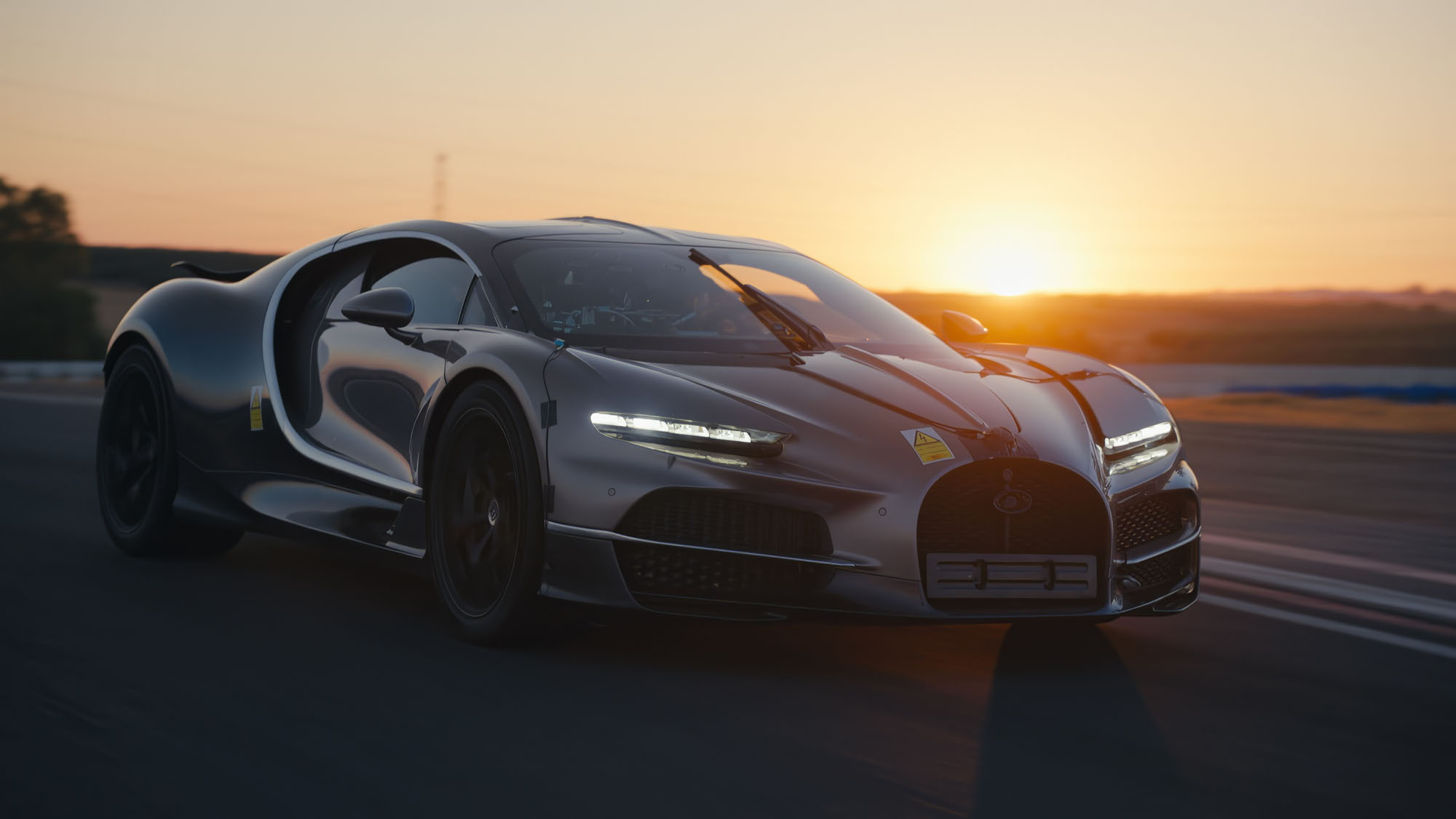
Bugatti Tourbillon’s 1,800-HP V16 Hybrid Faces Thermal Challenges
The Tourbillon introduces an entirely new powertrain architecture for Bugatti, combining a naturally aspirated V16 engine with three electric motors to produce a total of 1,800 horsepower. Two electric motors drive the front axle, while a third works alongside the V16 at the rear. The hybrid system incorporates an 800-volt battery.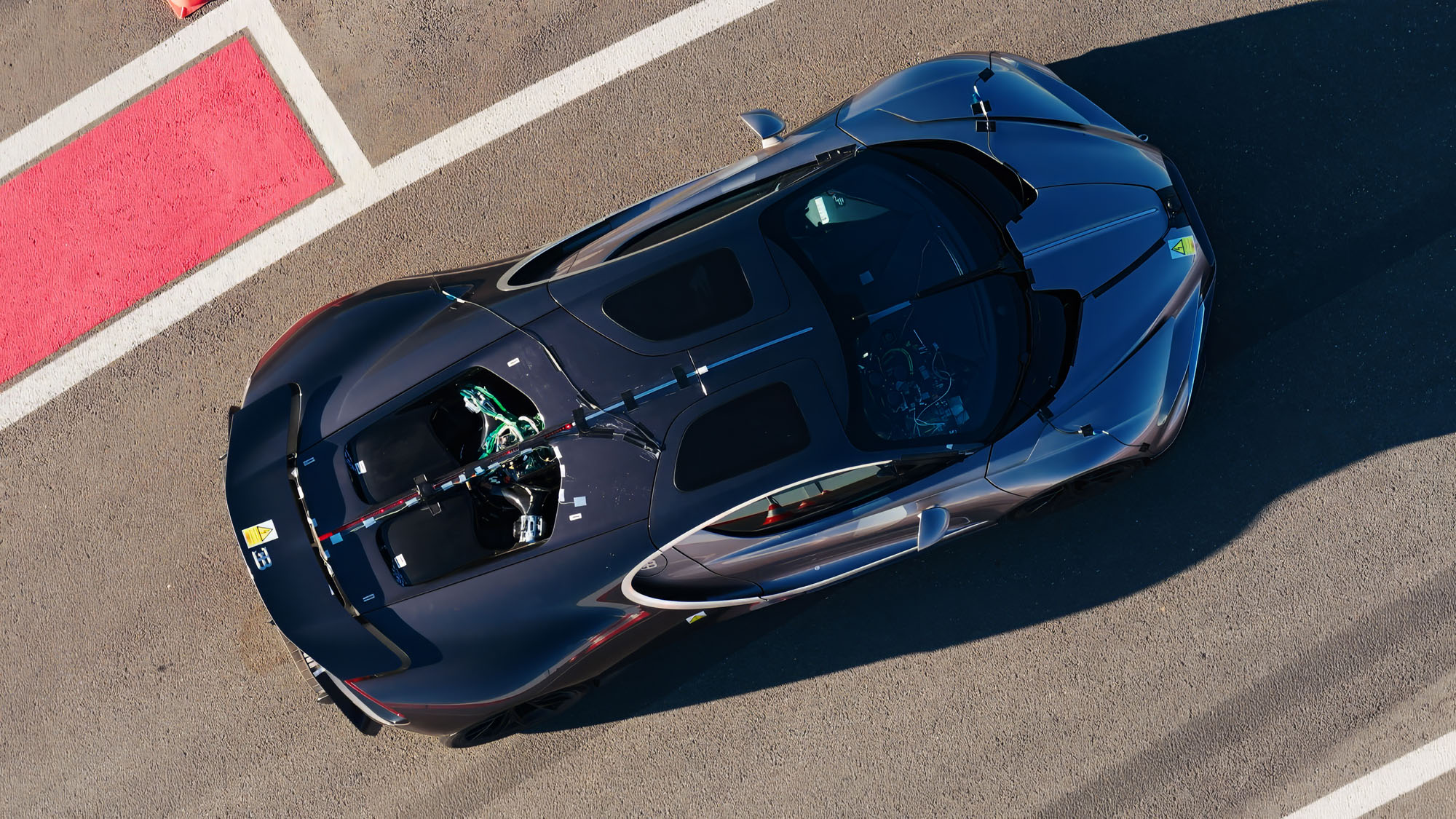
Managing the heat generated by this combination of combustion and electric propulsion is a central engineering challenge, particularly during sustained high-performance driving in hot climates. To monitor thermal performance, engineers installed more than 200 thermocouples throughout the development prototype. These sensors continuously measured temperatures across critical components and vehicle areas as operating conditions changed.
Road and Racetrack Testing Near Seville
Bugatti’s Spanish validation program concentrated on three areas: passenger-compartment climate control, component temperatures and the performance of the vehicle’s overall cooling architecture. Public-road testing took place in temperatures reaching approximately 45°C (113°F), reproducing conditions owners could encounter in particularly hot regions.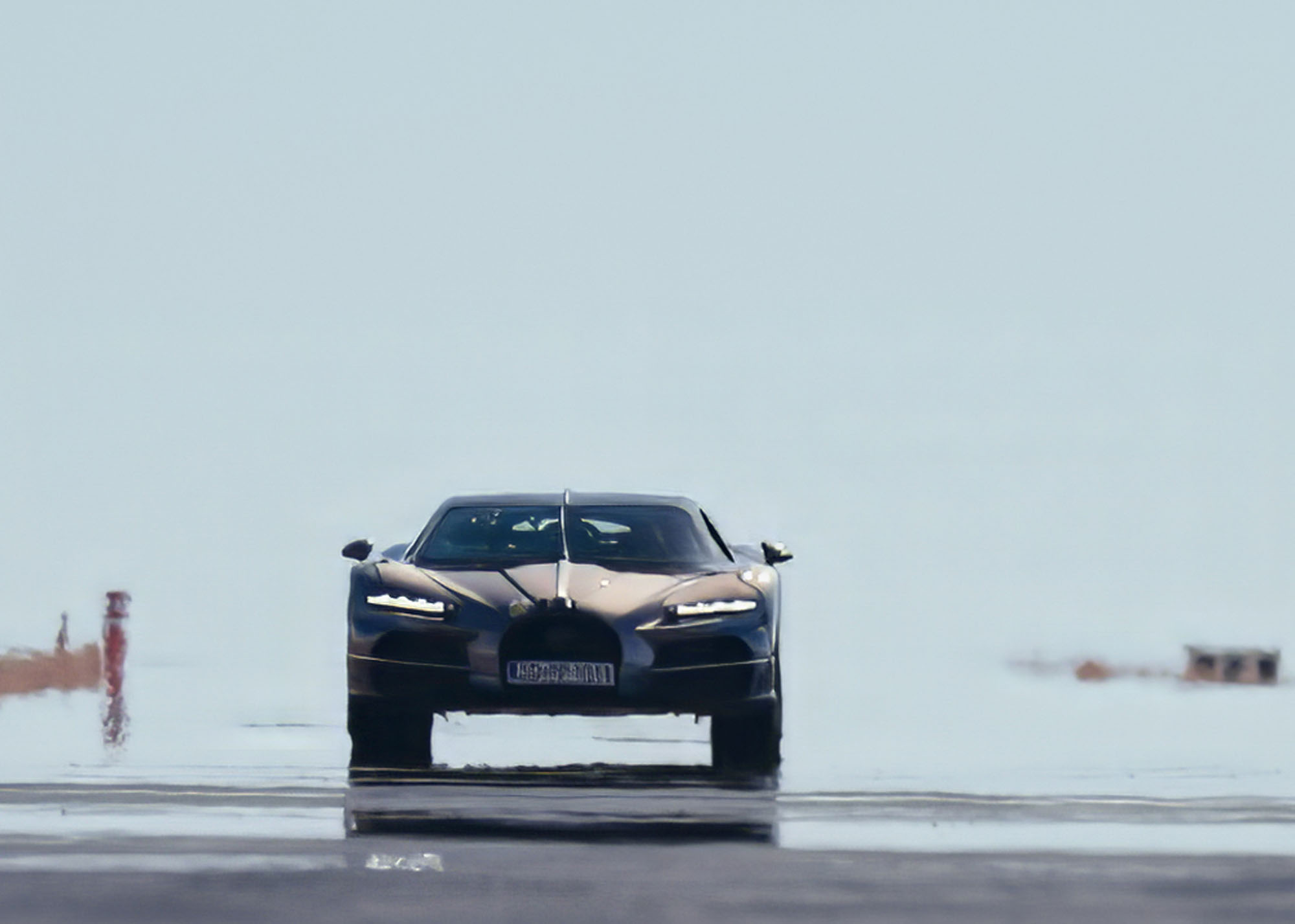
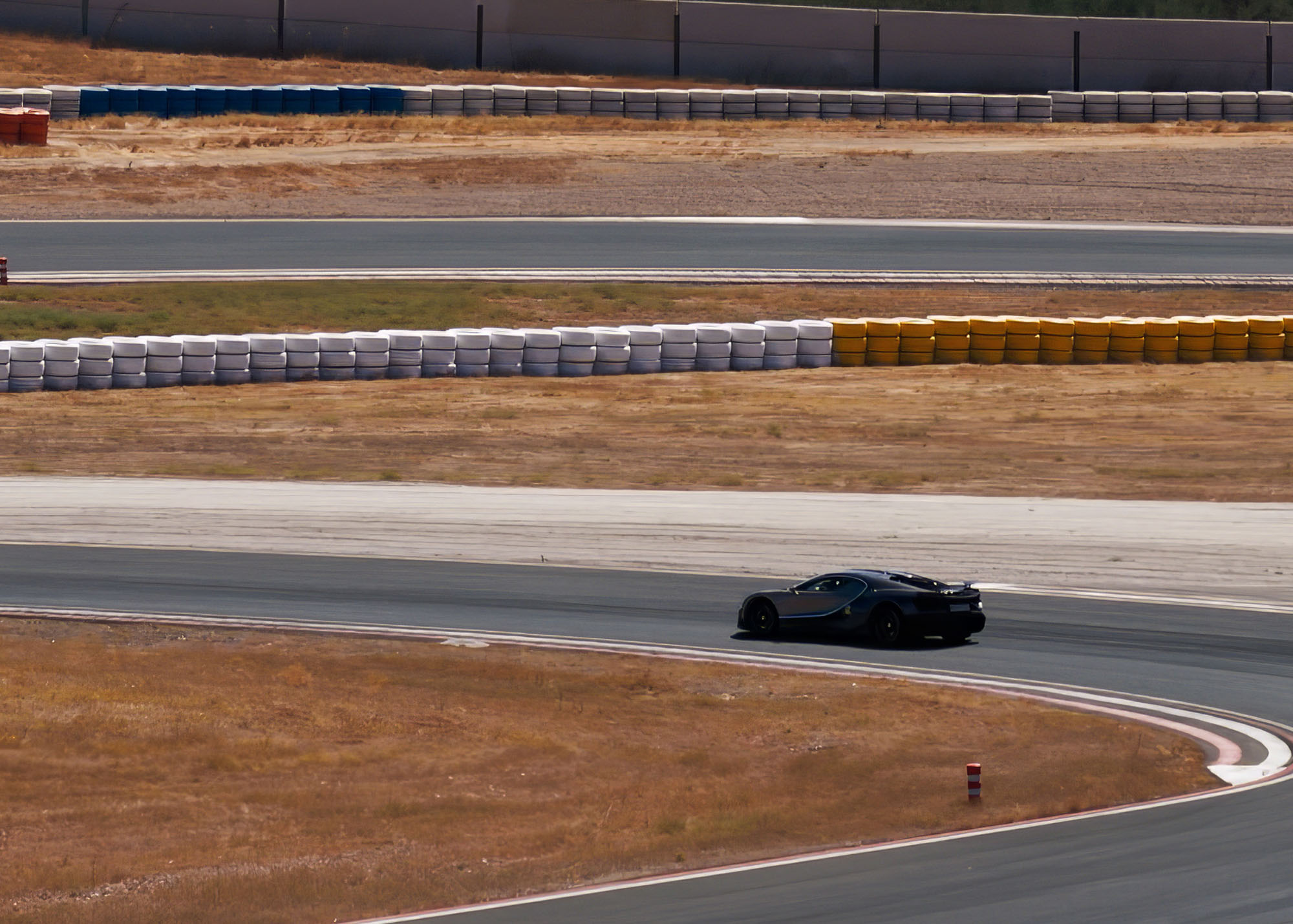
Track testing imposed a different challenge. Sustained high-speed operation placed simultaneous thermal demands on the tires, brakes, powertrain and cooling systems, allowing engineers to evaluate the vehicle under repeated heavy loads. Cabin comfort was also a priority. Bugatti sought to maintain stable air-conditioning airflow and interior temperatures even during demanding driving conditions. According to the manufacturer, the development team collected the required data and successfully validated the systems targeted during the Spanish program.
Previous Testing Reached 50°C in Dubai and -30°C in Sweden
The Seville program builds on approximately 15 months of earlier hot-weather development. An earlier experimental Tourbillon vehicle underwent testing in Dubai, where temperatures exceeded 50°C (122°F). The Spanish sessions used more advanced validation prototypes as the project progressed toward its final development targets. At the opposite temperature extreme, Bugatti previously tested the Tourbillon in Arjeplog, Sweden, in conditions reaching -30°C (-22°F). Those winter trials focused on low-grip handling, braking, stability systems and vehicle operation in severe cold.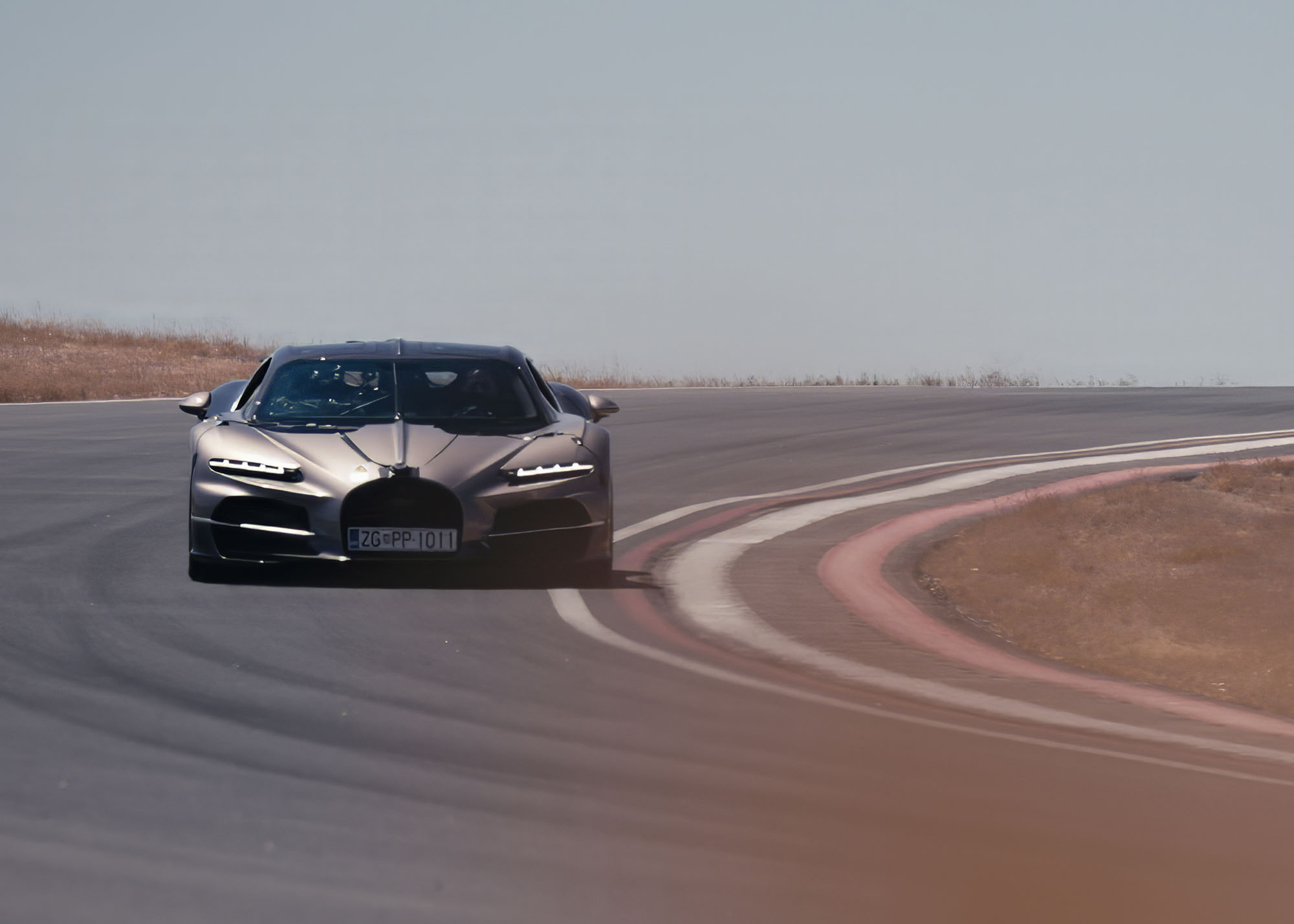

Together, the programs allow Bugatti to compare computer simulations with real-world performance across widely differing environmental conditions.
Validation is a must
The Tourbillon’s combination of a naturally aspirated V16, three electric motors and an 800-volt electrical architecture creates substantial cooling and thermal-management demands. Successful validation in southern Spain is significant because the hypercar must manage those demands during both everyday road use and sustained circuit driving without compromising cabin comfort. The latest results represent progress toward final validation, although Bugatti has not disclosed a completion date or confirmed that all development testing is finished.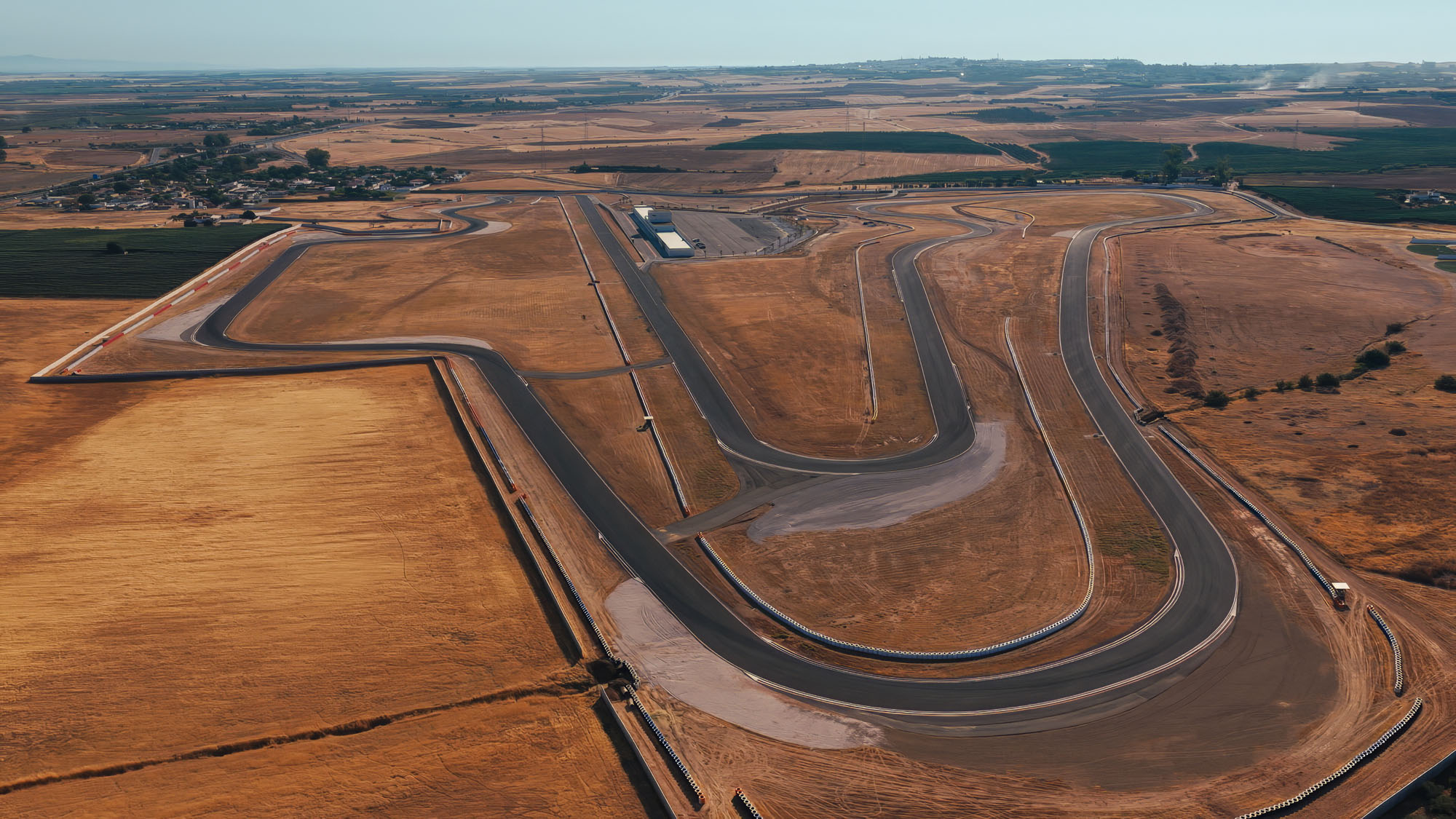
Key Facts
| Specification | Detail |
| Manufacturer | Bugatti |
| Model | Tourbillon |
| Vehicle type | V16 hybrid hypercar |
| Combined output | 1,800 hp |
| Combustion engine | Naturally aspirated V16 |
| Electric motors | Three |
| Front axle | Two electric motors |
| Rear axle | V16 plus one electric motor |
| Battery architecture | 800V |
| Latest testing location | Seville, Spain |
| Public-road temperature | Approximately 45°C (113°F) |
| Earlier Dubai testing | Exceeded 50°C (122°F) |
| Sweden winter testing | As low as -30°C (-22°F) |
| Thermal sensors | More than 200 thermocouples |
| Testing environments | Public roads and racetrack |
| Validation outcome | Targeted systems successfully validated |
| Documentary series | A New Era |
Above contents © 2026 Bugatti Automobile S.A.S. reviewed and edited by Rex McAfee , @rexmcafee 🏁