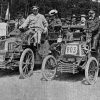
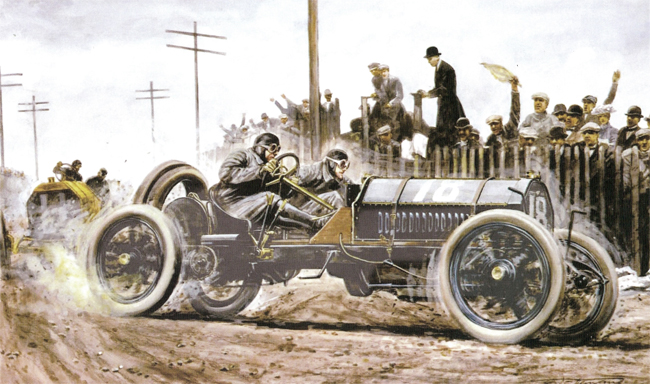
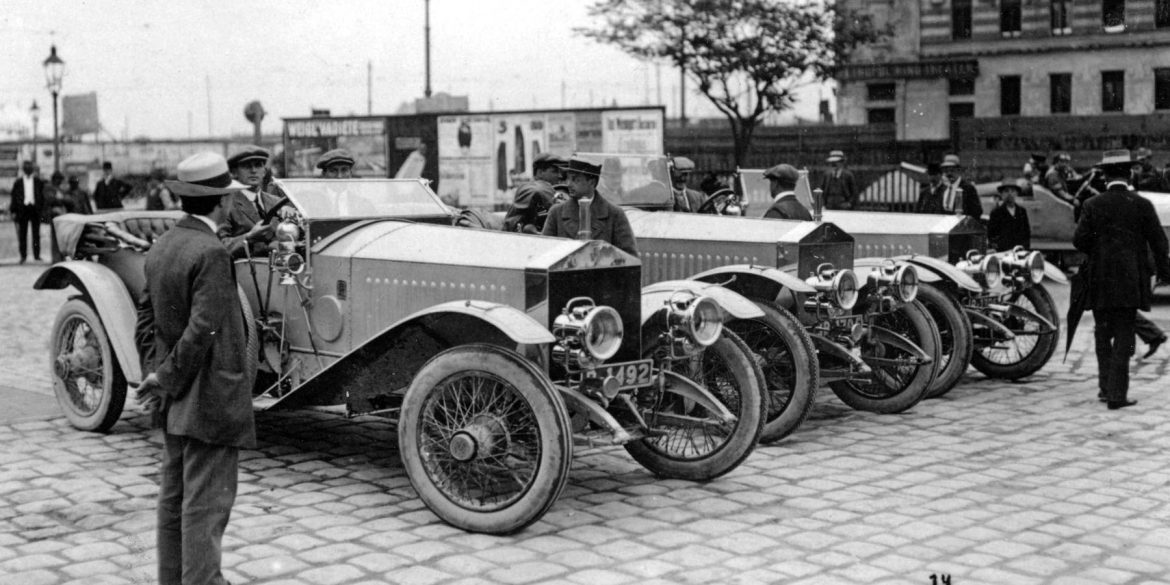
Eight days and 2,600 kilometres through the Alps in 1913, and the Silver Ghost team's performance is where "the best car in the world" came from. Rolls-Royce's own account of cars, crews and conditions, 110 years on.

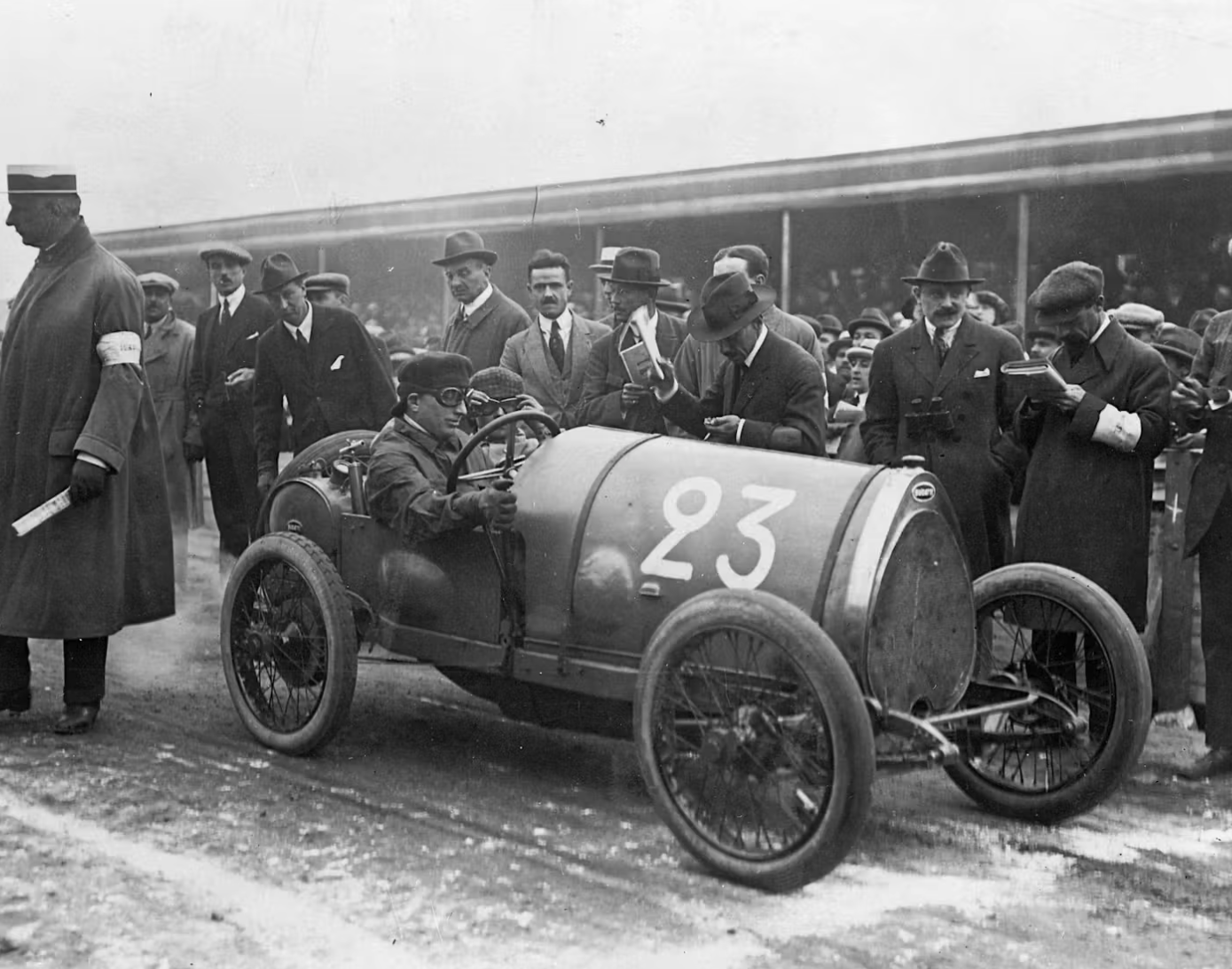
Motor racing began on 22 July 1894 on the road from Paris to Rouen, and in twenty years it invented everything that followed: the city-to-city races and the Race of Death, the Gordon Bennett Cup and the first Grand Prix, the Vanderbilt Cup, Brooklands and Indianapolis, the Blitzen Benz and the 100-mph lap, Peugeot's twin-cam engine and Mercedes' 1-2-3 at Lyon a month before the war. This is the whole story of the pioneers, 1894 to 1918, and every linked piece is a source.
The pieces to start with
Paris–Madrid, Paris–Berlin and Paris–Vienna, the Gordon Bennett Cup, the first Grand Prix, Annis's Blitzen Benz, the Vanderbilt Cup and Newman on Peking to Paris.
Charles Jarrott drove in the 1903 Paris–Madrid and remembered a long, never-ending white ribbon and crowds stepping in front of the cars. His own account of the last great inter-country race, which ended at Bordeaux.
Walter Wellman's 1901 dispatch from Fort de Champigny: crowds who paid up to 360 francs for a carriage, racers drawn up beside numbered trees, and a countdown in French just before 3.30 in the morning.
James Gordon Bennett, the newspaper owner who sent Stanley after Livingstone, put up a cup for six races between 1900 and 1905, never drove a car and never watched one of them. Dennis David on the rules and the races.
The Gordon Bennett rules allowed three cars per country, and Germany got six because Mercedes had an Austrian factory. French makers objected, so the ACF ran its own race near Le Mans on 26–27 June 1906. Art Evans traces it.
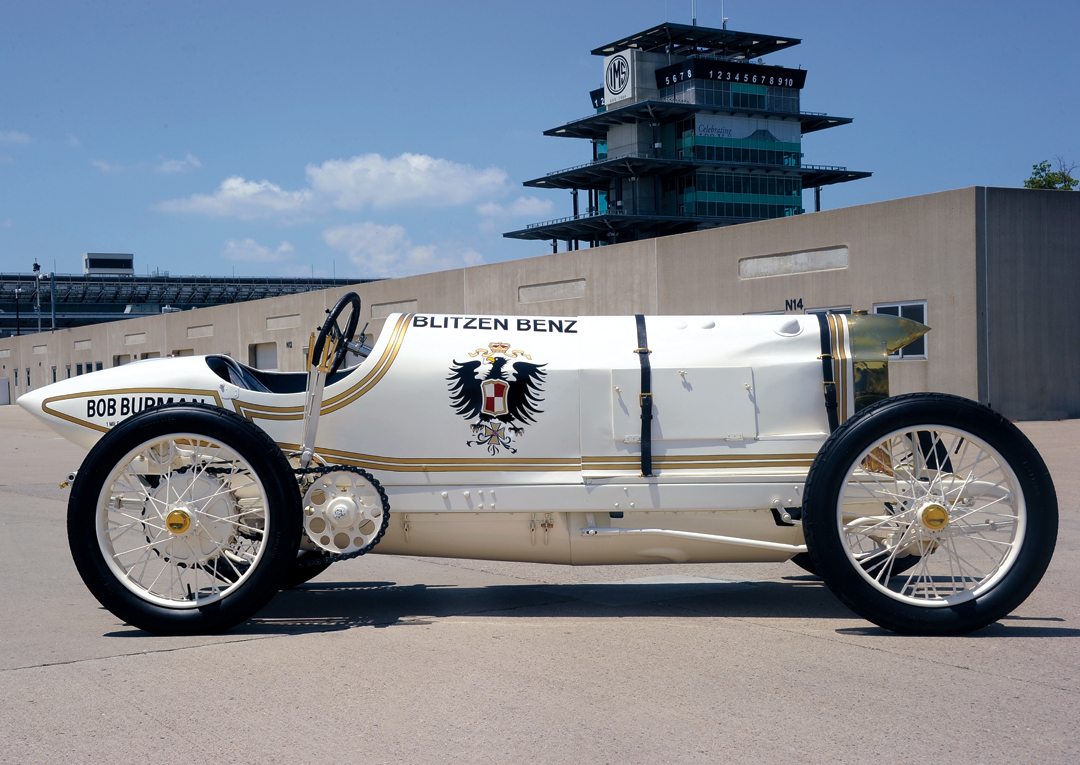
Benz built 603 cars in 1900, more than anyone, then lost ground because Karl Benz refused any idea not developed in-house. The 200 PS record car's story turns on an incendiary Belgian and two American showmen. Casey Annis drives it.
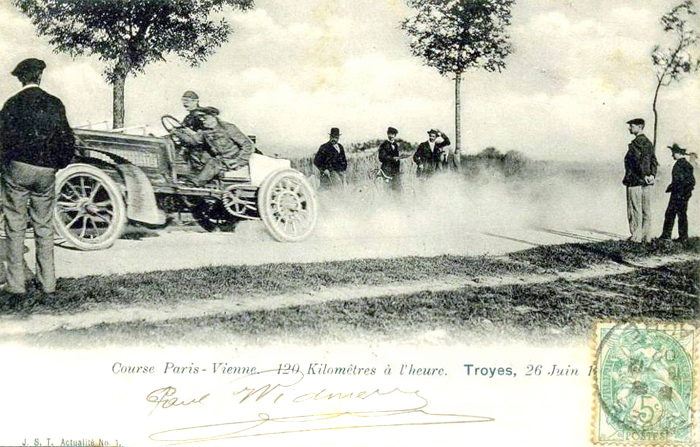
Charles Jarrott had driven his new 70 Panhard for the first time three days before the 1902 Paris–Vienna start at Champigny, sheltering under a tree to compare notes on the speed with George Du Cros. His account of the race.
The first Vanderbilt Cup started at 6 a.m. on 8 October 1904 over 30.24 miles of Nassau County roads, despite court orders. Wallace's riding mechanic fell out and was run over, so he recruited another from the crowd.
The 1903 Paris–Madrid race killed 10 people before Bordeaux and was stopped there. Four years on, Le Matin's 39-word front-page challenge proposed that a man with a car could go anywhere, and dared someone to prove it. Robert Newman's account.
The newest long-form writing on the era, as it is published.
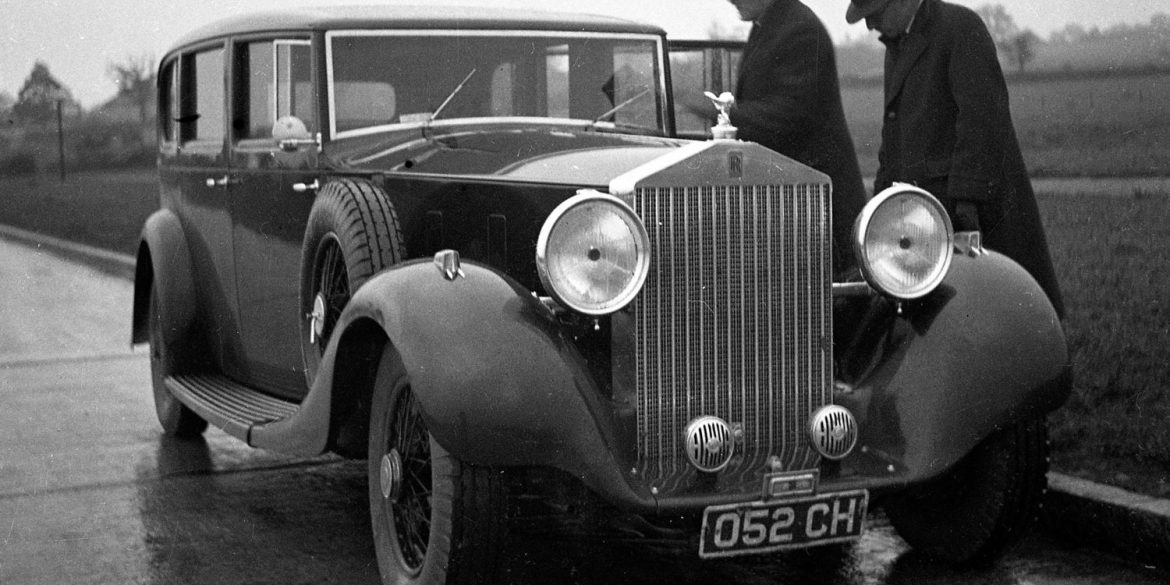
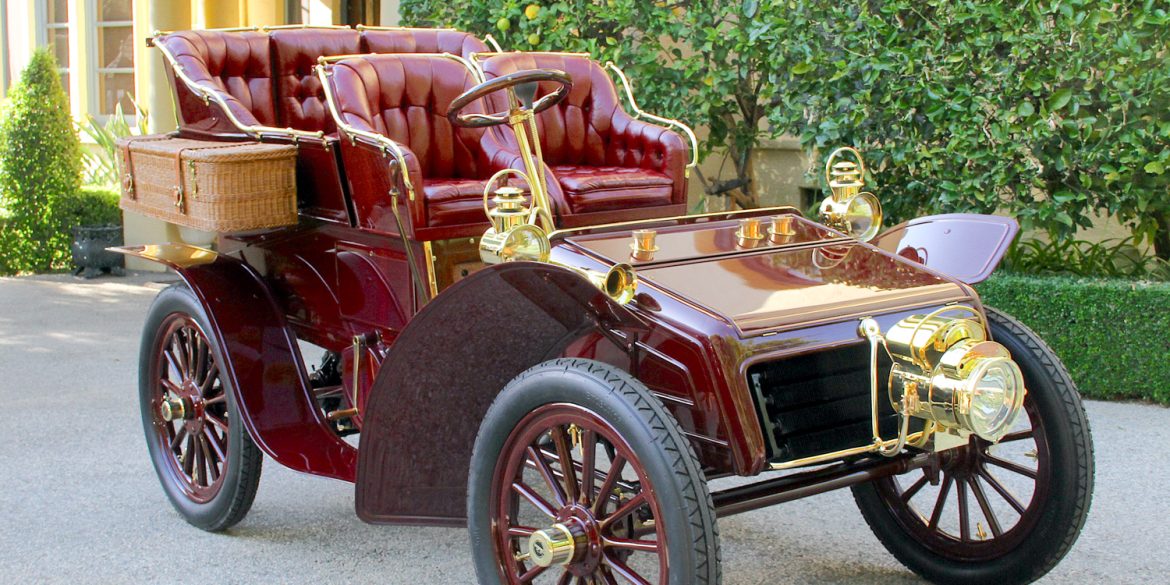
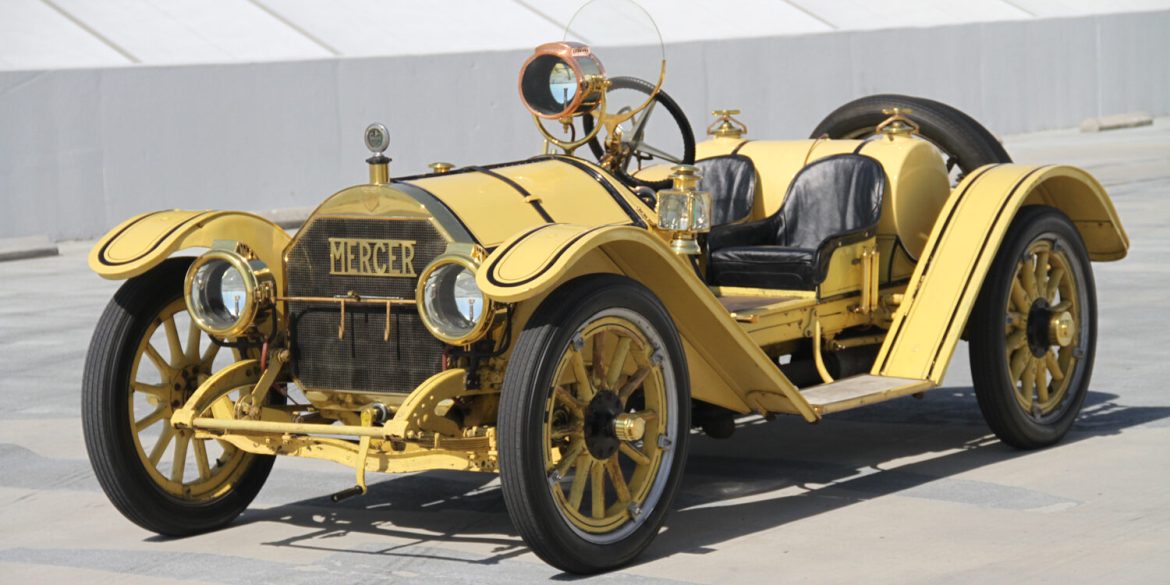
Karl Benz's three-wheeler of 1886 and Gottlieb Daimler's four-wheeler of the same year were curiosities for eight years; what made them an industry was racing. The French newspaper contests of 1894 and 1895 showed that a car could cover 700 miles without a horse, the city-to-city races of 1898 to 1903 made Panhard, Mors, Renault, Mercedes and Fiat into names, and the Gordon Bennett Cup and the Grand Prix of 1906 turned a national pastime into an international sport with rules, teams and colours — French blue, German white, Italian red, British green from the Irish race of 1903. By 1914 the racing car had a twin-overhead-camshaft engine with four valves a cylinder, wire wheels with detachable rims, front brakes and a hundred-mile-an-hour cruising speed, and the Mercedes that won at Lyon that July had more in common with a car of 1934 than with the Panhard of 1894. The archive's Greatest Races series — Paris to Berlin 1901, Paris to Vienna 1902, Paris to Madrid 1903, the Gordon Bennett Cup, the Circuit des Ardennes and the Vanderbilt Cup — is the spine of this page; Pete Lyons's 1910 catches the era at its midpoint. What came next, the Bugatti Type 35 and the Bentley Boys, is on The Vintage Years; the Grands Prix of 1906 to 1914 are also the first chapter of the Grand Prix History hub.
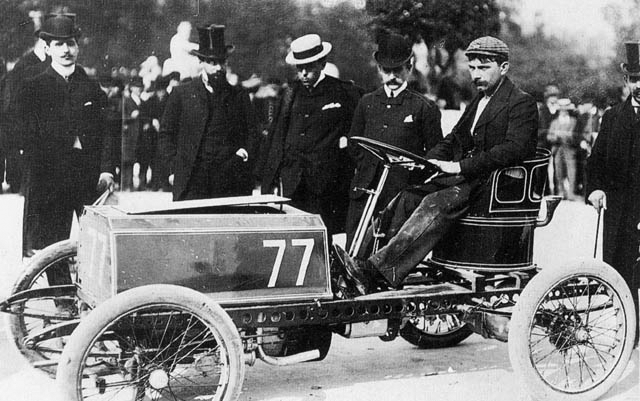
The first motoring competition was a reliability trial run by Le Petit Journal from Paris to Rouen on 22 July 1894, 79 miles, in which the Comte de Dion's steam tractor was fastest and the prize was shared between Panhard et Levassor and Peugeot because their Daimler-engined petrol cars needed no stoker. The first real race was Paris–Bordeaux–Paris in June 1895, 732 miles, which Émile Levassor drove alone in 48 hours 48 minutes in a two-seat Panhard at an average of 15 mph, only to lose the prize to a four-seat Peugeot on a technicality; the archive's Panhard et Levassor is the marque, and Levassor died in 1897 of injuries from the Paris–Marseille race of 1896, the first racing driver to be killed by racing. In America the Chicago Times-Herald race of Thanksgiving Day 1895 was won by Frank Duryea at 7 mph in the snow; in Britain the Emancipation Run of 14 November 1896 celebrated the repeal of the 4-mph Locomotive Act and became the London to Brighton Veteran Car Run, which the archive has covered year after year. Paris–Amsterdam–Paris in 1898, won by Fernand Charron's Panhard, had the first spectator death and the first racing-car body built for speed; the De Dion-Bouton tricycles and voiturettes that filled the small classes are in De Dion-Bouton and its American saga, and Bertha Benz's drive of 1888 is where the whole thing started.
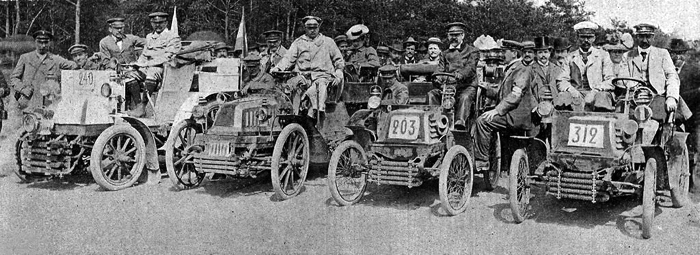
For five years the great races ran from one capital to another on open roads, with the cars started at intervals and timed through the towns. René de Knyff's Panhard won the Tour de France of 1899, 1,350 miles in seven stages; Henri Fournier's Mors won Paris–Bordeaux and Paris–Berlin in 1901 at 44 mph, in the 60-horsepower car that is the archive's Mors 60 HP; and Marcel Renault's little 16-horsepower Renault beat the 70-horsepower giants to Vienna in 1902, in the archive's longest race story, Paris to Vienna, over the Arlberg pass. Then came Paris–Madrid on 24 May 1903: 224 starters, three million spectators on the roads, and at least eight dead by Bordeaux — Marcel Renault among them — before the French and Spanish governments stopped the race and had the cars towed to the station by horses. Fernand Gabriel's Mors had averaged 65 mph from the back of the field. City-to-city racing ended that day, and the closed circuit — first the Circuit des Ardennes of 1902, won by Charles Jarrott's Panhard — took over.
James Gordon Bennett Jr, the New York Herald's owner, gave a trophy in 1900 for a race between national teams of three cars, each built entirely in its own country, and for six years it was the championship of the world. Charron's Panhard won from Paris to Lyon in 1900 and Léonce Girardot's in 1901; Selwyn Edge's Napier won the 1902 race to Innsbruck when everyone else broke, which took the 1903 race to the British Isles — to Athy in Ireland, because racing was illegal on English roads — where the British cars were painted shamrock green and Camille Jenatzy's Mercedes 60 won. Léon Théry's Richard-Brasier won the last two, in the Taunus in 1904 and in the Auvergne in 1905, after which France, which had more makers than it could fit into a three-car team, replaced the Cup with its own Grand Prix. The archive's Gordon Bennett Cup history and Robert Newman's portraits of Jenatzy, the Red Devil who had set the first 100-km/h record in the electric La Jamais Contente in 1899, and Théry, the Chronometer, are the sources; J. Walter Christie is the American who brought front-wheel drive to the 1907 Grand Prix.
The principal race of each year from 1894 to 1916, who won it and in what, and what else happened that season.
| Year | The race of the year | Winner | Car | Also that year |
|---|---|---|---|---|
| 1894 | Paris–Rouen trial, 79 miles, 22 July | Prize shared by Panhard et Levassor and Peugeot; de Dion's steamer fastest | Panhard et Levassor / Peugeot / De Dion-Bouton | The first motoring competition |
| 1895 | Paris–Bordeaux–Paris, 732 miles | Émile Levassor, first on the road at 15 mph (prize to Koechlin's four-seat Peugeot) | Panhard et Levassor | Chicago Times-Herald race won by Frank Duryea; the Automobile Club de France founded |
| 1896 | Paris–Marseille–Paris, 1,063 miles | Émile Mayade, 15.7 mph | Panhard et Levassor | Levassor injured (dies 1897); the Emancipation Run, London to Brighton, 14 November |
| 1897 | Paris–Dieppe and Marseille–Nice | Jamin (Léon Bollée); de Dion's steamer | Léon Bollée / De Dion | Jenatzy and Chasseloup-Laubat begin the speed record duel |
| 1898 | Paris–Amsterdam–Paris, 889 miles | Fernand Charron, 26.9 mph | Panhard et Levassor | First spectator death (Périgueux); the first streamlined racing body |
| 1899 | Tour de France Automobile, 1,350 miles | René de Knyff, 30.2 mph | Panhard et Levassor | Jenatzy's La Jamais Contente, first car past 100 km/h, 29 April |
| 1900 | Gordon Bennett Cup, Paris–Lyon; Paris–Toulouse–Paris | Fernand Charron; Alfred Velghe ('Levegh') | Panhard et Levassor; Mors | National racing colours set for the Cup |
| 1901 | Paris–Berlin, 687 miles | Henri Fournier, 44.1 mph | Mors 60 | Gordon Bennett Cup to Girardot's Panhard; the first Mercedes 35 hp at Nice Week |
| 1902 | Paris–Vienna, 615 miles | Marcel Renault, 38.9 mph in a 16-hp light car | Renault | Edge's Napier wins the Gordon Bennett; Jarrott's Panhard wins the first circuit race, the Ardennes |
| 1903 | Paris–Madrid, stopped at Bordeaux | Fernand Gabriel, 65.3 mph | Mors | Marcel Renault among the dead; city-to-city racing banned; Jenatzy's Mercedes 60 wins the Gordon Bennett at Athy |
| 1904 | Gordon Bennett Cup, Taunus | Léon Théry, 54.5 mph | Richard-Brasier | First Vanderbilt Cup, Long Island, to Heath's Panhard |
| 1905 | Gordon Bennett Cup, Auvergne | Léon Théry, 48.4 mph | Richard-Brasier | Vanderbilt Cup to Hémery's Darracq; Brasier wins the last Cup, France ends it |
| 1906 | Grand Prix de l'ACF, Le Mans, 770 miles over two days | Ferenc Szisz, 62.9 mph | Renault AK 90 | First Targa Florio to Cagno's Itala; Vanderbilt Cup to Wagner's Darracq; the Stanley steamer at 127.66 mph |
| 1907 | Grand Prix de l'ACF, Dieppe | Felice Nazzaro, 70.6 mph | Fiat | Nazzaro also wins the Targa Florio and Kaiserpreis; Brooklands opens 17 June; Borghese's Itala from Peking to Paris |
| 1908 | Grand Prix de l'ACF, Dieppe | Christian Lautenschlager, 69.0 mph | Mercedes | Vanderbilt Cup to Robertson's Locomobile Old 16, the first American win; American Grand Prize at Savannah to Wagner's Fiat; the Thomas Flyer from New York to Paris; the Model T |
| 1909 | No Grand Prix; Vanderbilt Cup, Long Island | Harry Grant, Alco | Alco | Indianapolis Motor Speedway opens in August; Hémery's Blitzen Benz at 125.95 mph, Brooklands |
| 1910 | American Grand Prize, Savannah | David Bruce-Brown, 70.6 mph | Benz | Oldfield at 131.7 mph on Daytona Beach in the Blitzen Benz; Bugatti's Type 13; the Prince Henry Trial to Porsche's Austro-Daimlers |
| 1911 | First Indianapolis 500, 30 May | Ray Harroun, 74.6 mph | Marmon Wasp | Bruce-Brown's Fiat S74 wins at Savannah; Burman 141.7 mph in the Blitzen Benz; the Fiat S76; the Mercer Raceabout |
| 1912 | Grand Prix de l'ACF, Dieppe, 956 miles over two days | Georges Boillot, 68.5 mph | Peugeot L76 | Indianapolis to Dawson's National; Bruce-Brown killed at Milwaukee; DePalma's Mercedes wins the Vanderbilt Cup |
| 1913 | Grand Prix de l'ACF, Amiens | Georges Boillot, 72.2 mph | Peugeot L5.6 | Goux's Peugeot wins Indianapolis; Rolls-Royce Silver Ghosts sweep the Alpine Trial |
| 1914 | Grand Prix de l'ACF, Lyon, 467 miles, 4 July | Christian Lautenschlager, 65.3 mph; Mercedes 1-2-3 | Mercedes 4.5-litre | Thomas's Delage wins Indianapolis; Guinness's Sunbeam the Tourist Trophy; war on 3 August |
| 1915 | Indianapolis 500 | Ralph DePalma, 89.8 mph | Mercedes (the 1914 Grand Prix car) | Resta wins the Vanderbilt Cup and Grand Prize at San Francisco; the Stutz White Squadron |
| 1916 | Indianapolis 500 (300 miles) | Dario Resta, 84.0 mph | Peugeot | Georges Boillot killed over Verdun; no European racing until 1919 |
Car names link to every story on the site about that car. Speeds are race averages.
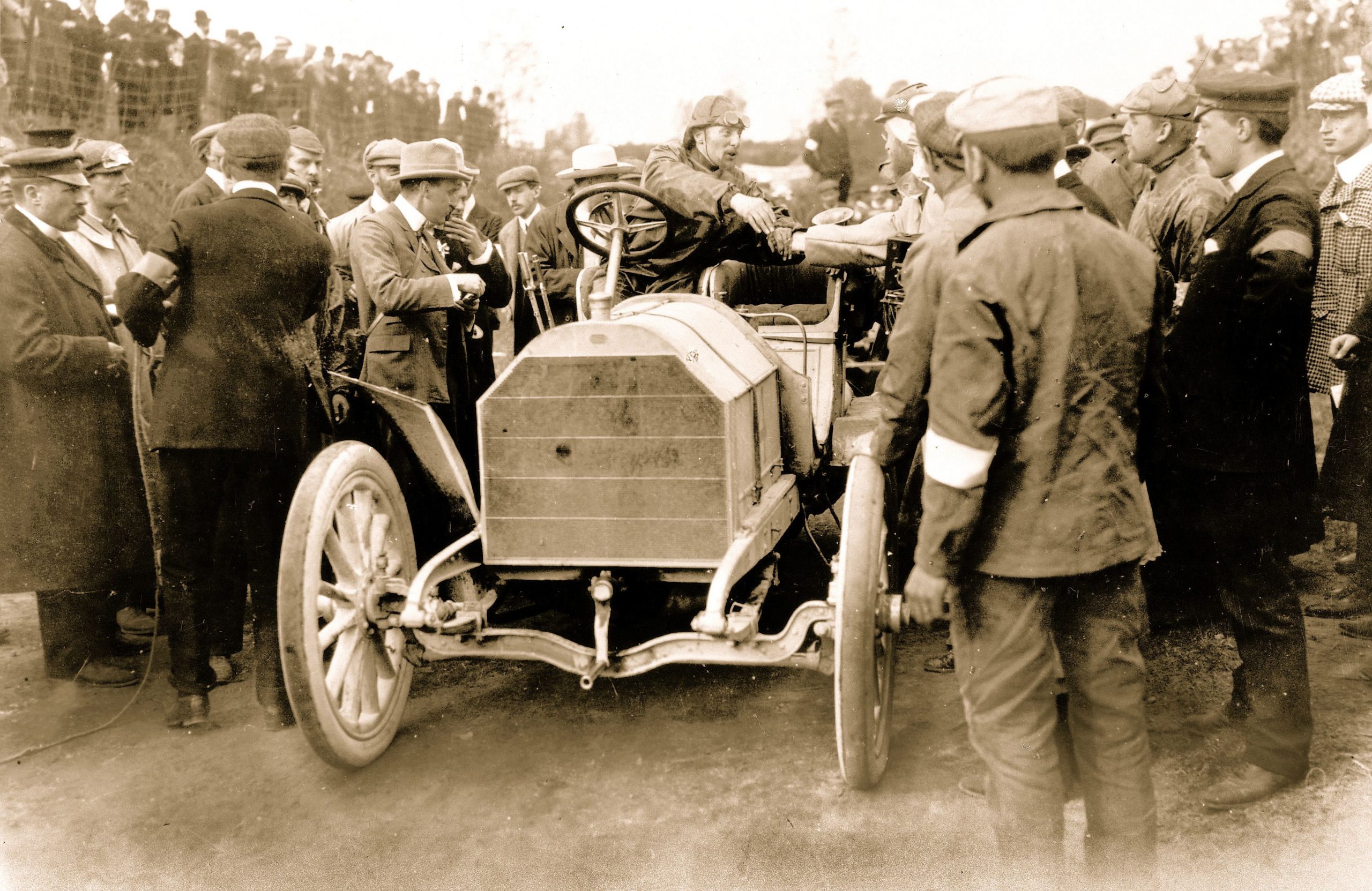
The Automobile Club de France's Grand Prix was run on 26–27 June 1906 on a 64-mile triangle of public roads east of Le Mans, twelve laps over two days, 32 cars from France, Italy and Germany, and Ferenc Szisz won it for Renault at 63 mph because his car had Michelin's detachable wheel rims and could change a punctured tyre in two minutes where the others took ten; the archive's First Grand Prix and Robert Newman's Ferenc Szisz tell it. Felice Nazzaro's Fiat won everything in 1907 — the Targa Florio, the Kaiserpreis and the Grand Prix at Dieppe — in Newman's Felice Nazzaro; Christian Lautenschlager's Mercedes won the 1908 Grand Prix at Dieppe for Germany, and then the French makers, beaten twice at home, boycotted their own race and there was no Grand Prix in 1909, 1910 or 1911. Vincenzo Florio's Targa Florio, first run in 1906 around the mountains of Sicily and won by Alessandro Cagno's Itala, filled the gap with the Coppa Florio; Ed McDonough's Wolsit and Lancia Tipo da Corsa are Italian racers of the years, and Porsche's Grand Prix Austro-Daimlers, by Karl Ludvigsen, are the Prince Henry Trial winners of 1910.
William K. Vanderbilt Jr gave a cup of his own in 1904, raced on the public roads of Long Island, and for the next twelve years it was the biggest sporting event in America, with crowds of a quarter of a million standing in the road. George Heath's Panhard won in 1904, Victor Hémery's Darracq in 1905, Louis Wagner's in 1906 — Jim Richardson's Forgotten Vanderbilt Winner is the car — and in 1908, on the new Long Island Motor Parkway, George Robertson's Locomobile "Old 16" became the first American car to win, in Locomobile Type 1906 and David Newhardt's Born from Steam. The archive's Vanderbilt Cup history and race profile cover all of it; the American Grand Prize at Savannah, won by Wagner's Fiat in 1908 and by David Bruce-Brown's Benz and Fiat in 1910 and 1911, is in Newman's David Bruce-Brown; Mike Lawrence's Brighton Beach Memoirs is the 24-hour races on the Coney Island dirt. Carl Fisher's Indianapolis Motor Speedway opened in August 1909, was paved with 3.2 million bricks that winter, and held the first 500-mile race on 30 May 1911, won by Ray Harroun's single-seat Marmon Wasp with its rear-view mirror at 74.6 mph; the European cars came from 1913 — Jules Goux's Peugeot, René Thomas's Delage, Ralph DePalma's Mercedes in 1915, Dario Resta's Peugeot in 1916 — and the archive's two-part History of the Indianapolis 500 and the Indianapolis 500 page carry it on. Newman's Ralph DePalma, Dario Resta, Jules Goux and Eddie Rickenbacker, who raced before he flew, are the drivers; Jim Richardson's White Squadron is the Stutz team of 1915.
Hugh Locke King built Brooklands, the world's first purpose-built motor-racing circuit, on his Surrey estate in 1907 — 2.75 miles of banked concrete, opened on 17 June — because racing on British roads was illegal, and for thirty years it was where records were set; Mike Lawrence's Brooklands is the archive's history. The land-speed record ran from Jenatzy's 65.79 mph in 1899 through the steam Stanley at Ormond Beach in 1906 (127.66 mph) to the car that owns the era: the 21.5-litre Blitzen Benz, in which Victor Hémery did 125.95 mph at Brooklands in November 1909, Barney Oldfield 131.7 mph on Daytona Beach in March 1910 and Bob Burman 141.7 mph there in April 1911, a speed no car exceeded until 1919. Casey Annis's Lightning Strike, The Blitzen-Benz Remembered, the Blitzen at Brooklands and Karl Ludvigsen's Fastest Mercedes-Benz are the car; Fiat's 28.4-litre S76, the Beast of Turin, was its rival; J. Michael Hemsley's Propeller Cars and the Daimler-Benz Streamliners are the odd ideas of the time, and the Daimler Archives is where the records are kept.
The Grand Prix came back at Dieppe in 1912 and the car that won it changed engine design for ever: the Peugeot L76, designed by Ernest Henry for the three drivers who commissioned it — Georges Boillot, Jules Goux and Paolo Zuccarelli, les Charlatans — had twin overhead camshafts and four valves per cylinder in a 7.6-litre engine that gave as much power as Fiat's 14-litre monster, and Boillot drove it to victory over two days and 956 miles; Peugeot 1912 L76 is the archive's, with Newman's Georges Boillot and André Boillot. Boillot won again at Amiens in 1913 and Goux took the Peugeot to Indianapolis; Sunbeam's Coupe de l'Auto cars of 1912 and the 1914 Sunbeam Tourist Trophy car that won the Tourist Trophy for Kenelm Lee Guinness, Delage's 1914 Indianapolis winner and Ettore Bugatti's little Type 13 of 1910, in Ed McDonough's Brescia in Black and Pre-War Dominance, followed Henry's lead. Then at Lyon on 4 July 1914, over 467 miles of the hardest circuit yet, Mercedes brought five 4.5-litre cars with single-overhead-cam, four-valve aero-engine technology and a team plan, Boillot led for most of the day and broke on the last lap, and Lautenschlager, Wagner and Otto Salzer finished first, second and third; the archive's Mercedes 1914 GP is the car, and Jim Richardson's Charlatan Survivor the Peugeot that lost. A month later France and Germany were at war; one of the Lyon Mercedes, stranded in England, was stripped by Rolls-Royce and became the basis of the Eagle aero engine.
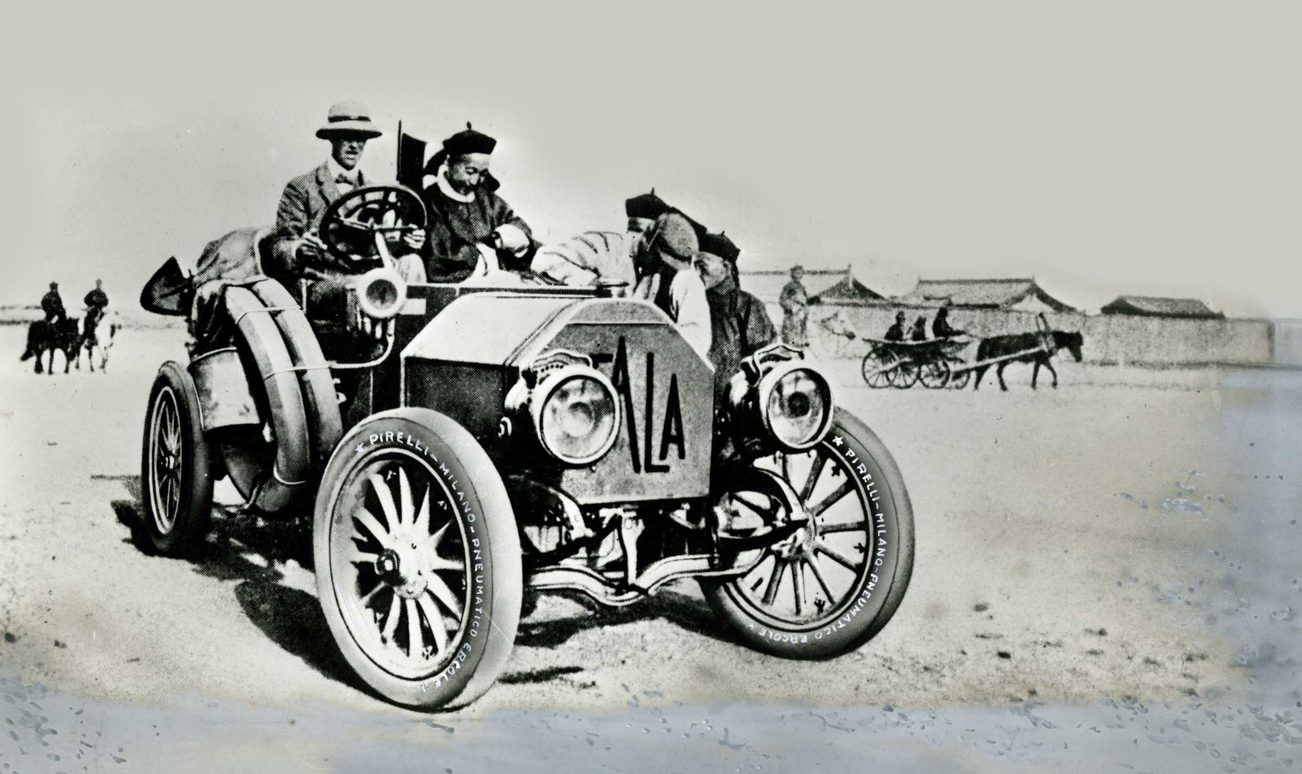
The road cars of the era were as remarkable as the racers. Rolls-Royce's 40/50, the Silver Ghost of 1907, ran 14,371 miles without an involuntary stop and swept the 1913 Alpine Trial; the archive's Rolls-Royce in the 1910s, Patrick Quinn's Ghost Story and a Silver Ghost Best of Show follow it. America's first sports cars were the Mercer Type 35 Raceabout of 1911 and the Stutz Bearcat of 1912, built to be driven to the track and raced, in Steve Natale's King of the Road and Jim Richardson's Athletic Bear; Richardson's Packard Model F is the car that crossed America in 1903, and the Pierce-Arrow 48 the grandest American car of 1916. Henry Ford's Model T of 1908, fifteen million by 1927, put the rest of the world on wheels; the Hispano-Suiza Alfonso XIII of 1911, the Prince Henry Vauxhall and the Mercedes 60 were the sporting cars of Europe, in Hispano-Suiza, a brief history; and the great endurance drives — Prince Borghese's Itala from Peking to Paris in 1907, 8,000 miles in 60 days, and the Thomas Flyer's New York to Paris the year after — proved that a car could go anywhere. The brass-era cars are still driven hard, in Brass Era Cars Offer Unreasonable Fun, Casey Annis's Brass-Era Balls and a Porsche owner's veteran racer.
European racing stopped in August 1914 and did not start again until 1919; America raced on until it entered the war in 1917, with DePalma's 1914 Mercedes winning Indianapolis in 1915 and Resta's Peugeot in 1916, and the board tracks at Sheepshead Bay, Chicago and Cincinnati running at 100 mph averages. The war took the drivers — Georges Boillot was shot down over Verdun in May 1916 — and gave back the engines: the aero motors Mercedes, Hispano-Suiza, Rolls-Royce and Bugatti built for the air forces taught a generation of engineers about light alloys, overhead camshafts and superchargers, and the Duesenberg, Ballot and Sunbeam straight-eights of 1919–21, in Duesenberg 1921 GP and Karl Ludvigsen's Lucky Shoe, were their children. The Grand Prix of 1921 at Le Mans, the first since Lyon, is on The Vintage Years; the archive's Black Motor Racing History starts its story in the same decade.
The era had no circuits until 1907 and raced on whatever France had: the routes nationales from Paris to Bordeaux, Berlin, Vienna and Madrid; the Ardennes triangle at Bastogne; the Taunus and the Auvergne for the Gordon Bennett; the Le Mans triangle of 1906, the Dieppe circuit of 1907–12, Amiens in 1913 and Lyon in 1914. Then the built tracks: Brooklands in 1907, Indianapolis in 1909, the board speedways from 1910. America raced on Long Island, at Savannah, Elgin, Santa Monica and the Brighton Beach dirt; Sicily had the Madonie; Britain had the Isle of Man for the Tourist Trophy because its Parliament would let it. Brooklands, Brighton Beach, the Savannah Stormer and the Indianapolis 500 page are the archive's circuit stories; the Peking–Paris and New York–Paris routes are on the map too.
The city-to-city races, the Gordon Bennett Cup, the first Grands Prix, the Vanderbilt Cup and the London to Brighton run, newest first.
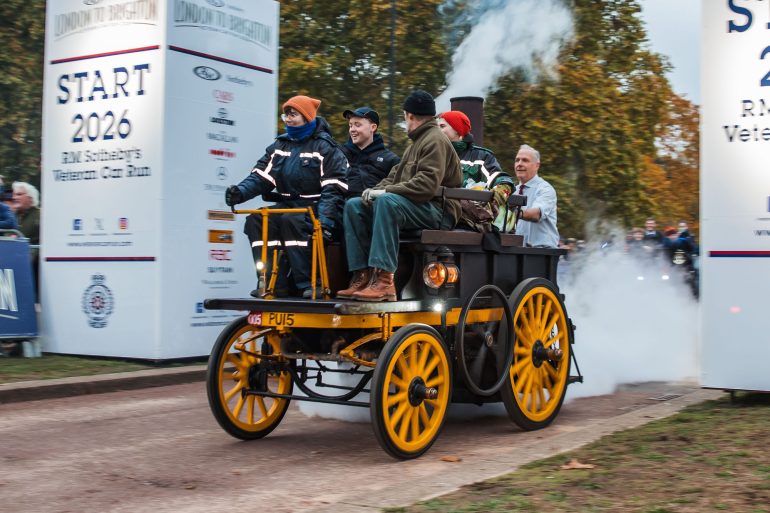
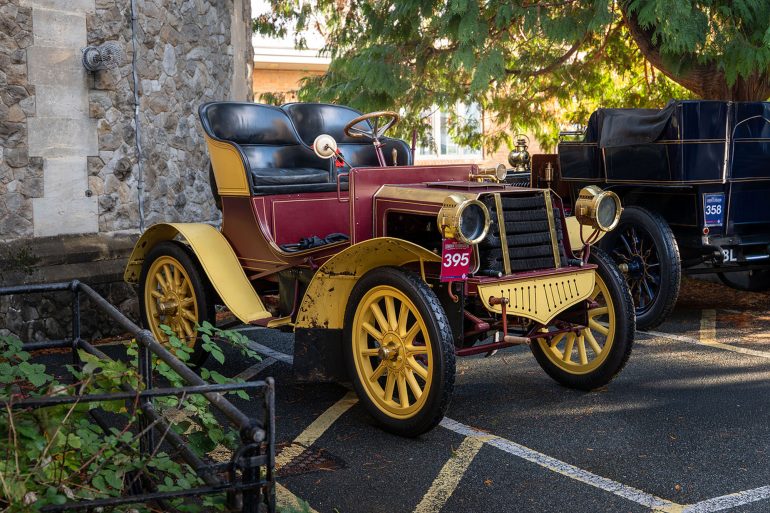
The surviving cars of the era are the stars of the London to Brighton run, the Pebble Beach brass classes and the Brooklands and Indianapolis centenaries: Panhard et Levassor, Mors, Darracq, De Dion-Bouton, Itala, the Fiat of Nazzaro and the Fiat S76, the Blitzen Benz, Locomobile Old 16, the Marmon Wasp, the Mercer Raceabout and Stutz Bearcat, the Rolls-Royce Silver Ghost, the Hispano-Suiza Alfonso XIII, the Ford Model T and the Bugatti Type 13. Each links to every story on the site about that car; the table and cards below set them in order.
Each links to every story on the site about that car; the model pages come next.
Single-car stories: Panhards, Mors, Mercedes, Fiats, the Blitzen Benz, Silver Ghosts, Mercers and the brass-era survivors.
The pioneers were makers as often as drivers: Karl and Bertha Benz, Gottlieb Daimler and Wilhelm Maybach, Émile Levassor and René Panhard, the Comte de Dion and Georges Bouton, Louis and Marcel Renault, Vincenzo Lancia, Ettore Bugatti, Henry Royce and Charles Rolls, Henry Ford, Louis Delage, Emil Jellinek, who named the Mercedes after his daughter, and Ernest Henry, whose Peugeot engine every racing engine since has copied. The drivers: Fernand Charron and René de Knyff, Camille Jenatzy, Léon Théry, Ferenc Szisz, Felice Nazzaro, Christian Lautenschlager, Victor Hémery, Louis Wagner, Georges Boillot and Jules Goux; in America Barney Oldfield, Ralph DePalma, David Bruce-Brown, Dario Resta, Ray Harroun, Bob Burman and Eddie Rickenbacker. The patrons who made the races: James Gordon Bennett, William K. Vanderbilt Jr, Vincenzo Florio, Hugh Locke King, Carl Fisher and Prince Scipione Borghese.
Makers, drivers and patrons of motoring's first twenty years.
Levassor's 15 mph from Paris to Bordeaux and back in 1895 became Gabriel's 65 mph to Bordeaux in 1903, Szisz's 63 mph over 770 miles in the 1906 Grand Prix and Lautenschlager's 65.3 mph at Lyon in 1914. Jenatzy's La Jamais Contente was the first car past 100 km/h, at 65.79 mph on 29 April 1899; the Blitzen Benz's 141.7 mph of 1911 was the fastest a car had gone until 1919, and faster than any aeroplane of the day. Paris–Madrid had 224 starters and at least eight deaths; the 1906 Grand Prix 32 starters and 11 finishers; the first Indianapolis 500 forty starters and 74.6 mph. The Peugeot L76 made about 130 horsepower from 7.6 litres; the Fiat S74 of 1911 roughly 190 from 14.1; the Blitzen Benz 200 from 21.5; the Lyon Mercedes 115 from 4.5 at 3,200 rpm, the highest-revving racing engine yet. Brooklands cost Locke King £150,000 and took nine months to build; Indianapolis used 3.2 million bricks. Ford built 15 million Model Ts between 1908 and 1927; Rolls-Royce 7,874 Silver Ghosts between 1907 and 1926; Mercer about 5,000 cars in all.
Short answers, with the long ones above.
The first competition was the Paris–Rouen trial of 22 July 1894; the first race with a winner decided on speed was Paris–Bordeaux–Paris on 11–13 June 1895, won on the road by Émile Levassor's Panhard.
The Grand Prix de l'Automobile Club de France at Le Mans on 26–27 June 1906, won by Ferenc Szisz in a Renault at 63 mph over 770 miles.
An annual race between national teams of three cars, 1900 to 1905, given by the newspaper owner James Gordon Bennett. It gave motor racing its national colours and was replaced by the French Grand Prix.
At least eight people, including Marcel Renault, were killed in the first day's 342 miles to Bordeaux; the French government halted the race there and banned city-to-city racing on open roads.
The Blitzen Benz: 141.7 mph at Daytona Beach in April 1911 with Bob Burman, a record that stood until 1919.
America's first great road race, given by William K. Vanderbilt Jr and run on Long Island from 1904 to 1910 and then at Savannah, Milwaukee, Santa Monica and San Francisco until 1916.
The speedway opened in August 1909 and ran the first 500-mile race on 30 May 1911, won by Ray Harroun's Marmon Wasp.
American and British names for the same years, roughly 1896 to 1915, when car fittings were brass and the cars had separate chassis, chain or shaft drive and no front brakes; "veteran" means built before 1905 and "Edwardian" 1905 to 1918.
The whole thread, newest first.