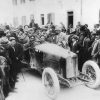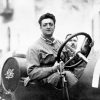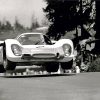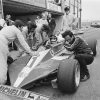
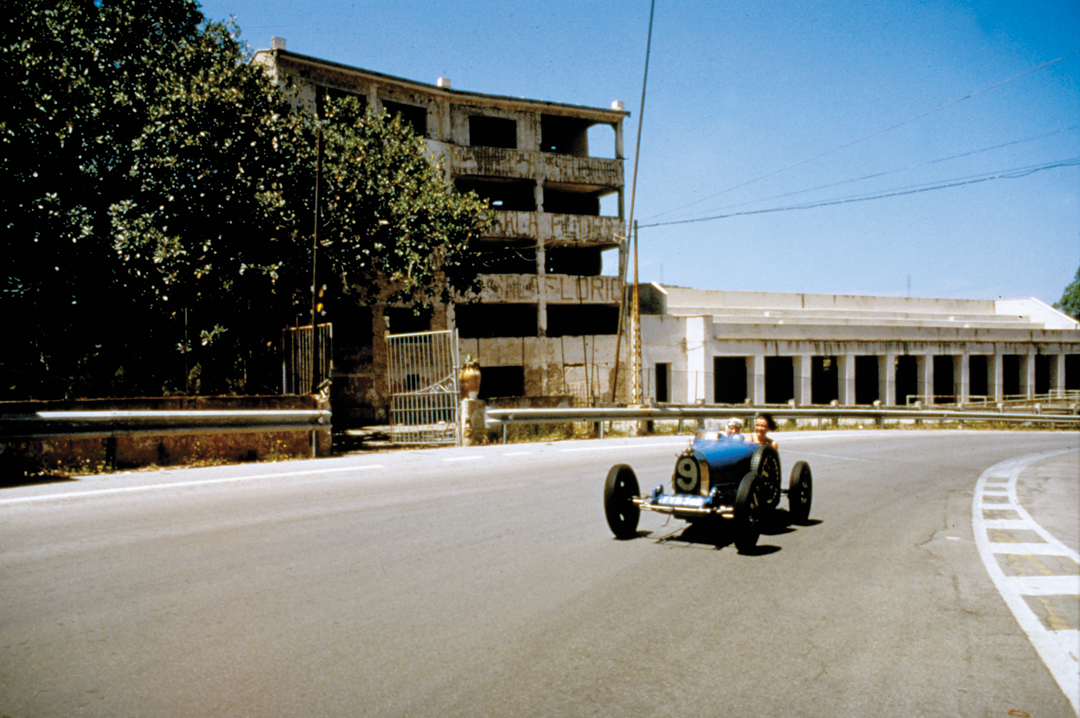
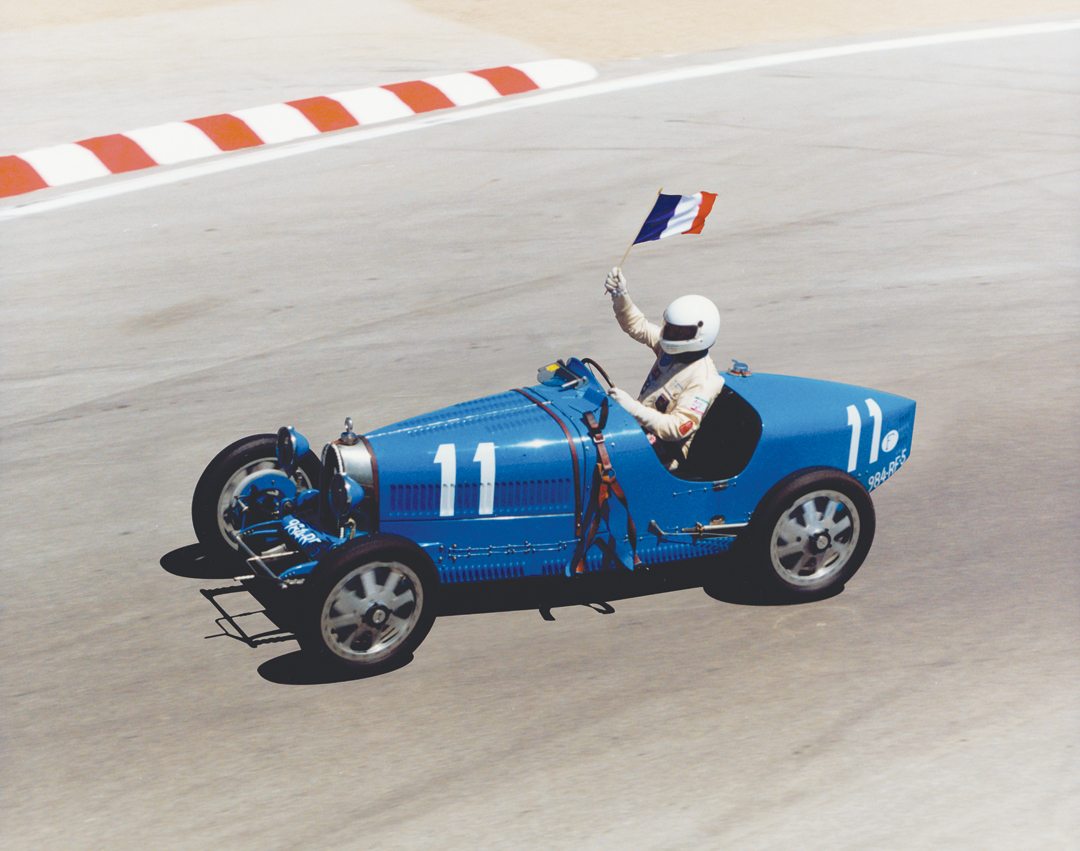
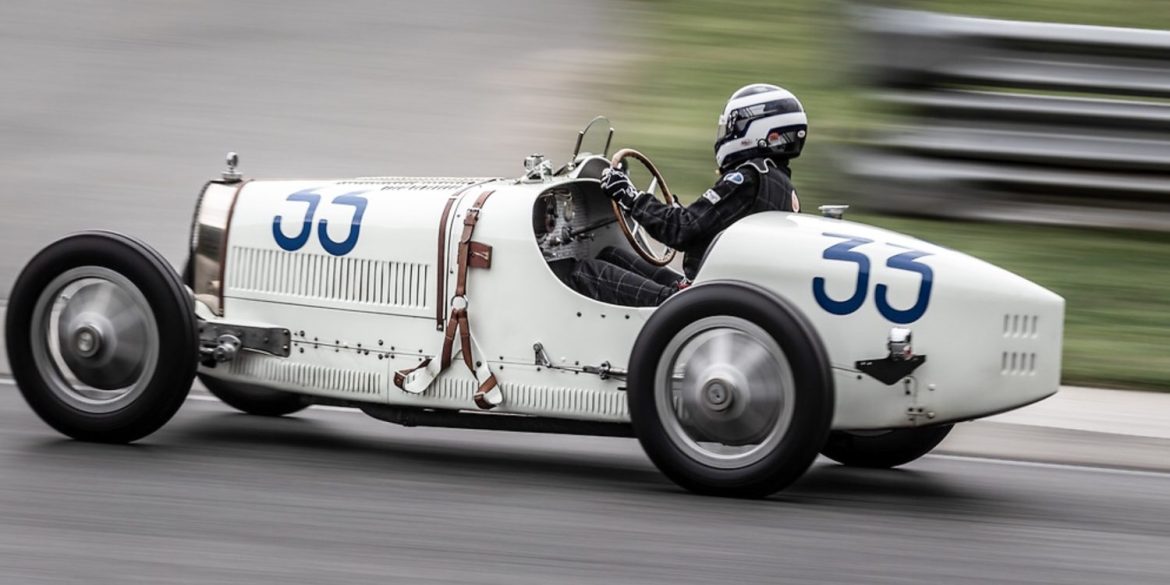
Chassis 37265, a 1927 Bugatti Type 37A still raced by Andrew Larson, was once driven by Anne-Cécile Itier against the men. Peter Linsky on why Bugatti sold Grand Prix cars to anyone with a bank draft.

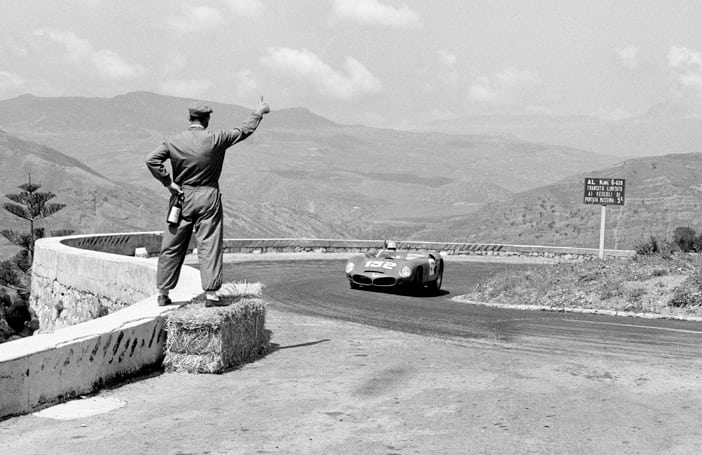
The oldest sports car race there is: seventy-two kilometres of Sicilian mountain road, nine hundred corners a lap, spectators sitting on the walls, and a schoolteacher from Palermo whose name was painted on every one of them. It ran from 1906 to 1977, outlived every other open-road race by twenty years, and survives as a rally and a parade. This is the whole history, from the Florio family's tricycle to the last flag at Cerda.
The pieces to start with
Newman's 100-Year Legend, Lyons's VV Nino, Costantini's Bugatti, the Superbugs and the 1955 Mercedes win.
In 1906 Vincenzo Florio persuaded a handful of manufacturers, gentlemen drivers and one racing lady to a bandit-infested island with no roads and no petrol pumps. Robert Newman begins the Targa Florio’s hundred years, 1906 to the bureaucrats of 1973.
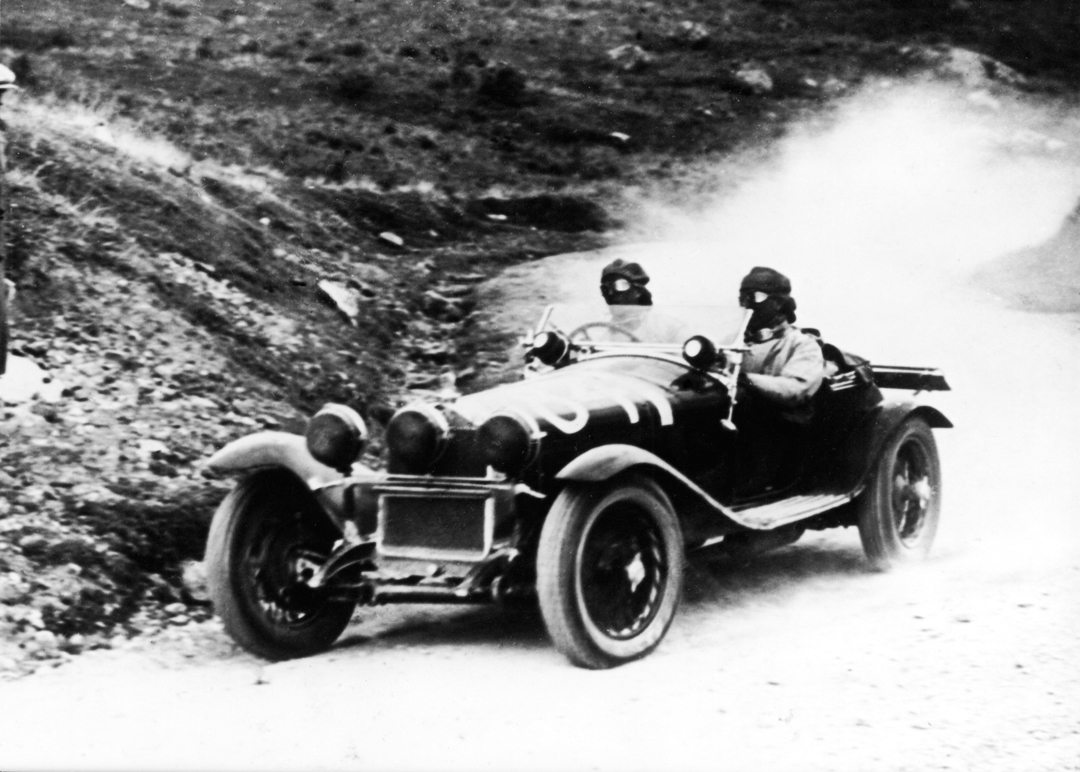
By 1924 the Targa Florio’s 3,000-odd corners had outgrown 8-liter leviathans, though Dubonnet still brought an 8-liter Hispano-Suiza. Ascari and Masetti’s 3.6-liter Alfa RLTFs met Porsche’s 2-liter supercharged Mercedes, and Christian Werner carried the day. Robert Newman continues.
A Targa Florio team opened their garage on race morning to find the Porsche gone and a courteous note: the restaurateur they had not paid had borrowed it. Pete Lyons on three Sicilian trips, legs dangling over the drivers’ helmets.
Meo Costantini’s 1926 Targa Florio-winning Bugatti Tipo 35C sat in a Palermo lock-up under armed guard, the Mafia’s word given that it would be left alone. Robert Newman spent 13 years getting it back there with owner Paul Foulkes-Halbard.
Six Type 35s were driven from Molsheim to Lyon for the 1924 French Grand Prix, with 45 staff housed in a tent with beds, baths and an ice-box. Two finished, 7th and 8th; the tires’ treads came off. Robert Newman.
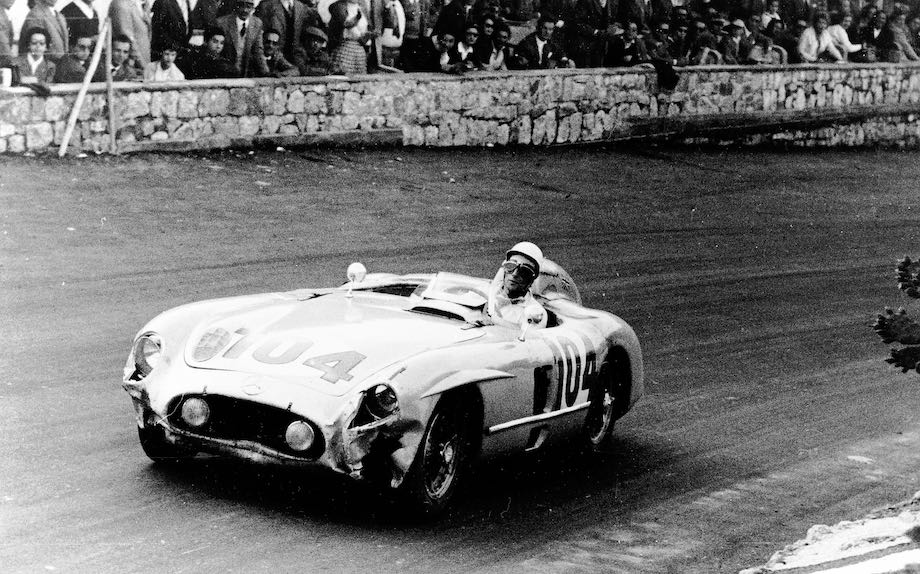
The Targa Florio was the decisive contest in the 1955 World Sports Car Championship. Under tremendous pressure to succeed at the final race of the season, Mercedes-Benz finished first and second with the 300 SLR, just enough to…
Pete Lyons first spoke to Phil Hill on a Palermo sidewalk, where the world champion stopped to tell two strangers how his throttle stuck and went into a bean field. Earlier: Sebring, a microphone and a half-gallon of orange juice.
Nuvolari started 229 car races and won 57, including 16 Grands Prix, two Mille Miglias and Le Mans, plus 39 of 124 on motorcycles. Robert Newman asks those who knew him, starting with Giovan Battista Guidotti, what he was like.
The newest long-form writing on the Targa Florio, as it is published.
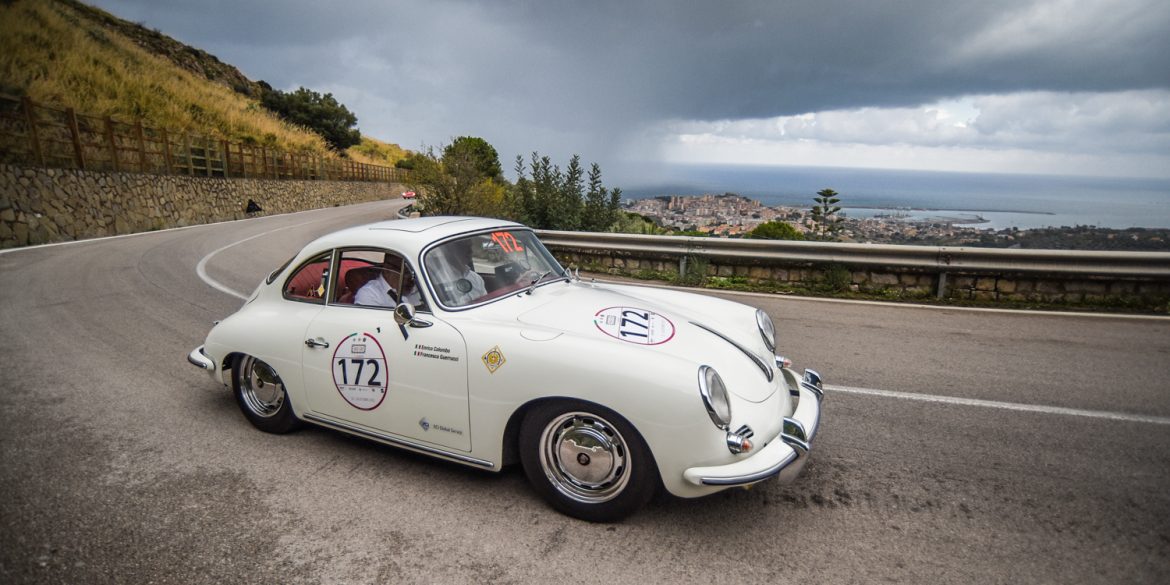
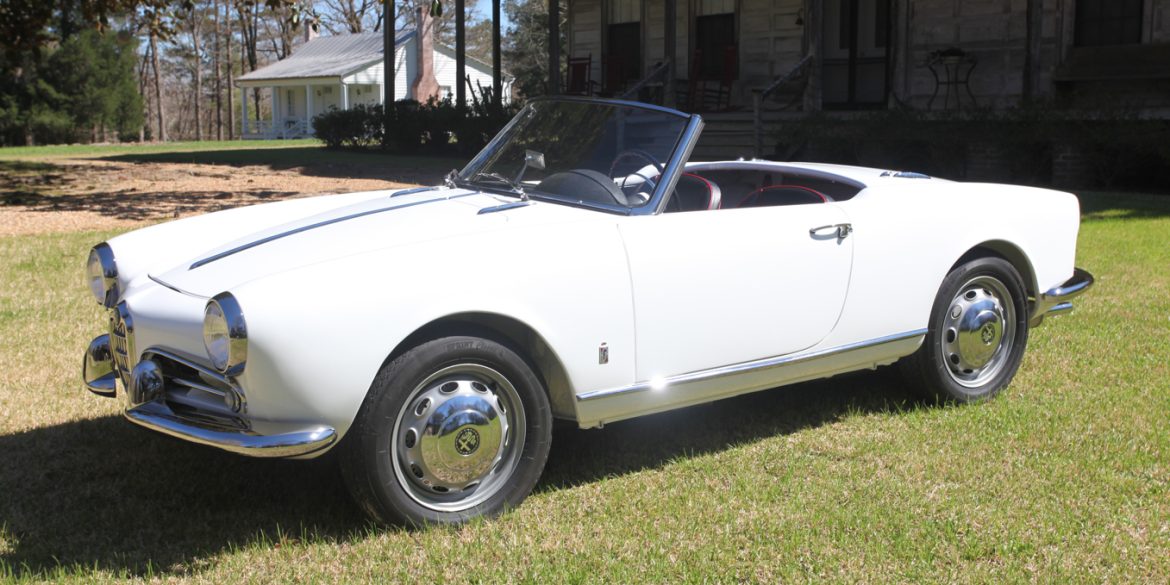
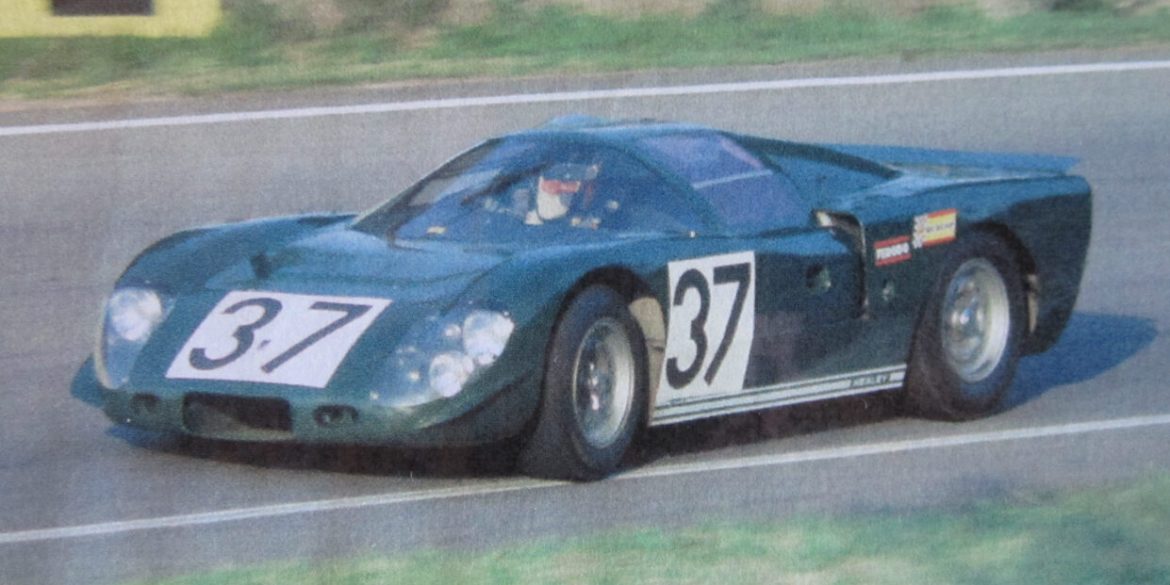
The Targa Florio was a race over the public mountain roads of the Madonie, east of Palermo in Sicily, founded by Vincenzo Florio in 1906 and run, with gaps for two wars, until 1977: sixty-one editions, which makes it the oldest sports car race there was and the longest-lived of all the open-road races. For most of its life it was run on the Piccolo Madonie, a lap of 72 kilometres with something like nine hundred corners, climbing from the sea at Campofelice through Cerda, Caltavuturo and Collesano and back down a straight along the coast; the cars started at intervals and the race was decided on time, over three laps before the war and eleven after it, ten hours or more of driving for the winner in the 1920s and under six by the 1970s. The names on the walls were painted there by the villages, and the crowds sat on the walls.
It belongs with the Mille Miglia, Le Mans and the Carrera Panamericana as one of the races manufacturers used to prove their cars, and it outlived the other road races by twenty years because Sicily was slow to care what the rest of the world thought was safe. Bugatti won it five times running in the 1920s, Alfa Romeo six times running in the 1930s, Mercedes-Benz took the 1955 world championship with it, and Porsche won eleven, more than any other make, which is why the 911 Targa carries the name. From 1955 to 1973 it was a round of the World Sportscar Championship. The archive's whole history of it, Robert Newman's two-part 100-Year Legend and the seventeen-thousand-word guide, is folded into the chapters that follow, with Pete Lyons on Nino Vaccarella, Moss on 1955 and the Classica of today.
In 1898 Ignazio Florio gave his seventeen-year-old brother Vincenzo a 293 cc De Dion-Bouton motor tricycle. There was no petrol in Sicily, so it sat on the Palermo dock until some was cabled for from Paris; when it finally ran, Vincenzo organised a handicap race against a cyclist and a horseman. The cyclist retired with cramp, the tricycle overheated, and the horse won. The Florios could afford to indulge the boy. The family had begun with a pharmacy near Piazza San Domenico and now owned Marsala wine, tuna fisheries, foundries, shipyards and a shipping line; when the women of the house wanted the Paris opera season they went in the family's own train. By 1904 Vincenzo was finishing third at Brescia in a 60-horsepower Mercedes, and the following year he put up 50,000 lire and a cup for a week of racing there, the Coppa Florio, which would be run until 1929.
The Targa itself was suggested to him in Paris, at a sporting dinner, by Henri Desgrange of L'Auto, who had invented the Tour de France two years earlier and asked why Sicily had no motor race. "Because we have no roads," Florio said. He went home, had his people look at the mule tracks of the Madonie east of Palermo, and decided they would do: a lap of 148 kilometres out of Cerda, up through Caltavuturo and Petralia to a thousand metres, down through Collesano to the coast and back along the sea. He commissioned a jeweller to make the prize, an engraved plaque, a targa, and put up 30,000 lire for the winner. Manufacturers were doubtful about an island with bandits, wolves and no petrol pumps; Florio told them it would be the hardest test of a car in the world, and one of them later admitted the motor car would have taken longer to develop without it. The archive's two-part 100-Year Legend (part two) is the long telling of how he talked them into coming.
The first Targa Florio was run on 6 May 1906, three laps of the Grande Madonie, 446 kilometres, starting at six in the morning from the railway station at Cerda, a village without a garage or a hotel; the teams lodged at the thermal baths in Termini Imerese. Strikes in France and a delay at the Genoa docks kept the entry down to ten cars. One crew was a husband and wife, she riding as mechanic. Two cars had their tanks filled with water by mistake. Vincenzo Florio himself retired. After nine and a half hours Alessandro Cagno brought his Itala home at an average of 46 km/h, half an hour ahead of a second Itala, and took the plaque. The crowd loved it, and the next year fifty cars entered.
Felice Nazzaro, who had come to Sicily years before as the young Fiat mechanic sent to look after Florio's cars, won the 1907 race for Fiat after Louis Wagner's Darracq broke its driveshaft within sight of him, and the locals treated it as a home win. There was no communication of any kind during a race: nobody, driver or team or crowd, knew the order until the cars came past the timekeepers at the end of a lap. Vincenzo Trucco won 1908 for Isotta Fraschini after Vincenzo Lancia stopped for tyres he did not need. In December 1908 the Messina earthquake and its wave killed more than a hundred thousand people; Florio ran the race anyway in May 1909, one lap only, and the Palermo baron Francesco Ciuppa won it in a SPA, the first Sicilian to do so, with Florio second in a Fiat. The Florio fortune was already failing by then; three of the family's children died in two years, and Vincenzo's wife of cholera in 1911. The race carried on. Ernesto Ceirano won in 1911 in a SCAT, the year a car called Alfa Romeo first appeared in a major race, and in 1912, partly to shame the authorities into building roads, the Targa became the Giro di Sicilia, a thousand kilometres round the whole island over two days. Cyril Snipe, an Englishman in a Manchester-backed SCAT, took 24 hours 37 minutes to win it, the first foreigner to do so. Nazzaro won the 1913 Giro in a car of his own name, four hours quicker, and Ceirano the 1914 one, two and a half hours quicker again. Then the war stopped it.
It came back in November 1919 on a shorter Medio circuit, 108 kilometres, four laps, in hail and gale and mist. Among the entries were a 21-year-old called Enzo Ferrari in a CMN and a Milanese car dealer called Antonio Ascari in a Fiat, who disappeared into a ravine and was pulled out after the race. René Thomas's Ballot led serenely until André Boillot, brother of the Peugeot driver Georges who had been shot down over the Front, caught and passed him. Boillot braked too late for the last corner, spun, hit the grandstand ten metres from the line, was pushed free by the crowd and crossed it in reverse. Protests went up; it was Ernest Ballot, the owner of the car lying second, who persuaded him to drive back, turn round and cross the line forwards. Boillot was declared the winner and fainted.
Count Giulio Masetti, a Tuscan amateur from a castle in Chianti, then won twice: in 1921 in a Grand Prix Fiat he had bought from Ascari, against the first proper works teams the race had seen, and in 1922 in a 1914 Mercedes, the year the race got classes and the Germans came in force, Mercedes arriving a month early with twenty men. Ugo Sivocci gave Alfa Romeo its first win in 1923 with a green four-leaf clover painted on the bonnet of his RL for luck; Alfa's racing cars have carried the quadrifoglio ever since. In 1924 Mercedes sent a supercharged two-litre designed by their new technical director, Ferdinand Porsche, and Christian Werner won with it while Ascari pushed his dead Alfa over the line and Alfred Neubauer finished thirteenth with Porsche as his riding mechanic.
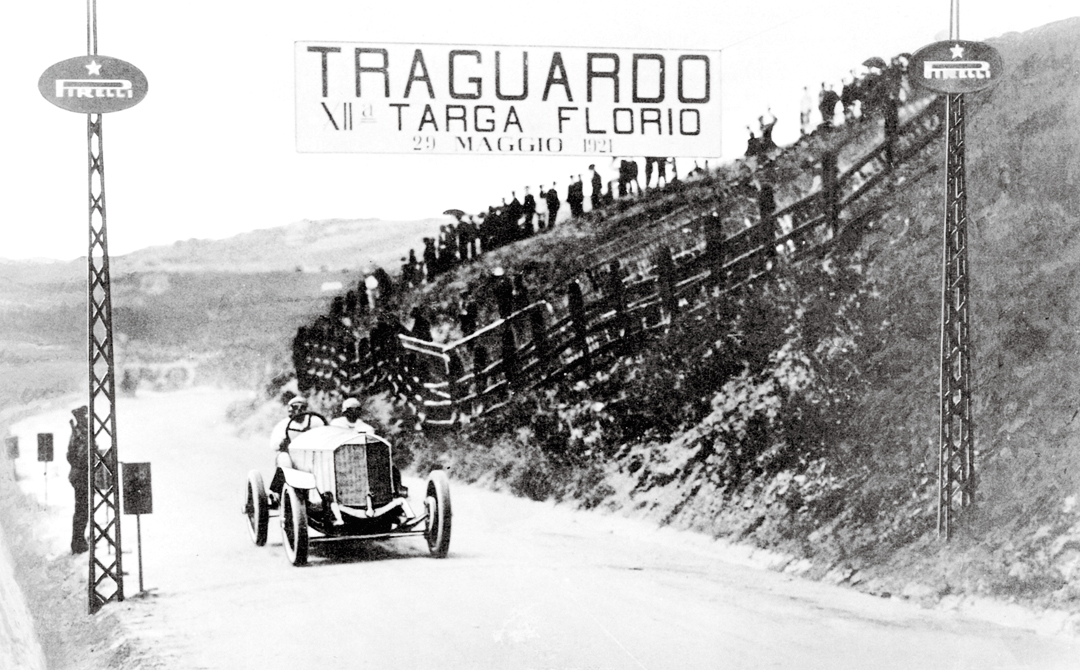
The Madonie rewarded agility over power, and from 1925 Ettore Bugatti's Type 35 had both. Meo Costantini won that year after Louis Wagner, lying second for Peugeot, stopped to pull his burning team-mate from a wreck, and won again in 1926, when Bugattis finished one-two-three and a works car first carried the trident of Maserati. That race began with Masetti, the Lion of the Madonie, dead under his overturned Delage on the first lap, a lone carabiniere guarding the body as the field went past for the rest of the day. Costantini retired to run the team and ran it like an army; Emilio Materassi won 1927, and Florio gave Bugatti a donkey, Totosche, which went home to Molsheim. In 1928 the 37 starters included a privateer called Tazio Nuvolari, who had fallen out with Costantini over a works drive, and Elisabeth Junek, a Czech banker's wife who had walked the circuit to learn it. Junek led the race on the second lap. Giuseppe Campari's Alfa led into the last one until he burst his only spare and drove ten kilometres on the rim, and Albert Divo's Bugatti came through to win by under two minutes, with Junek fifth, nine minutes down, her engine overheating from a leak. Her husband was killed beside her at the Nürburgring two months later and she never raced again. Divo won again in 1929, when only four of nineteen cars finished, and the French had taken five in a row. The archive's The Superbugs is the story of the Type 35; The Word's Out is about driving Costantini's 1926 winner, found in a guarded lock-up in the middle of Palermo.
Every edition, with the year's one-line story. Car names link to every story on the site about that car.
| Year | Winners | Car | The race |
|---|---|---|---|
| 1906 | Alessandro Cagno | Itala 35/40 HP | Grande circuit, 3 laps; 9h 32m |
| 1907 | Felice Nazzaro | Fiat 28/40 HP | |
| 1908 | Vincenzo Trucco | Isotta Fraschini | |
| 1909 | Francesco Ciuppa | SPA 28/40 HP | One lap, in a storm |
| 1910 | Tullio Cariolato | Franco | |
| 1911 | Ernesto Ceirano | SCAT 22/32 | |
| 1912 | Cyril Snipe | SCAT 25/35 | Giro di Sicilia, a lap of the island |
| 1913 | Felice Nazzaro | Nazzaro Tipo 2 | Giro di Sicilia |
| 1914 | Ernesto Ceirano | SCAT 22/32 | Giro di Sicilia |
| 1915 | No race 1915 to 1918 | War | |
| 1919 | André Boillot | Peugeot L25 | Medio circuit from this year |
| 1920 | Guido Meregalli | Nazzaro Tipo 2 | |
| 1921 | Giulio Masetti | Fiat 451 | |
| 1922 | Giulio Masetti | Mercedes GP 1914 | |
| 1923 | Ugo Sivocci | Alfa Romeo RL TF | Alfa's first; the quadrifoglio |
| 1924 | Christian Werner | Mercedes 2-litre | Supercharged; Porsche-designed |
| 1925 | Meo Costantini | Bugatti Type 35 | |
| 1926 | Meo Costantini | Bugatti Type 35T | Masetti killed |
| 1927 | Emilio Materassi | Bugatti Type 35C | |
| 1928 | Albert Divo | Bugatti Type 35B | Elisabeth Junek fifth |
| 1929 | Albert Divo | Bugatti Type 35C | Bugatti's fifth in a row |
| 1930 | Achille Varzi | Alfa Romeo P2 | |
| 1931 | Tazio Nuvolari | Alfa Romeo 8C 2300 | Grande circuit, for the last time |
| 1932 | Tazio Nuvolari | Alfa Romeo 8C 2300 Monza | Piccolo circuit from this year |
| 1933 | Antonio Brivio | Alfa Romeo 8C 2300 Monza | |
| 1934 | Achille Varzi | Alfa Romeo Tipo B | |
| 1935 | Antonio Brivio | Alfa Romeo Tipo B | |
| 1936 | Costantino Magistri | Lancia Augusta | Run in December for 1-litre cars |
| 1937 | Giovanni Severi | Maserati 6CM | Favorita park circuit, Palermo |
| 1938 | Giovanni Rocco | Maserati 6CM | |
| 1939 | Luigi Villoresi | Maserati 6CM | |
| 1940 | Luigi Villoresi | Maserati 4CL | Three weeks before Italy went to war |
| 1941 | No race 1941 to 1947 | War | |
| 1948 | Clemente Biondetti / Igor Troubetzkoy | Ferrari 166 S | Giro di Sicilia |
| 1949 | Clemente Biondetti / Aldo Benedetti | Ferrari 166 MM | Giro di Sicilia |
| 1950 | Mario Bornigia / Giancarlo Bornigia | Alfa Romeo 6C 2500 Competizione | Giro di Sicilia |
| 1951 | Franco Cortese | Frazer Nash Le Mans Replica | Back on the Piccolo Madonie |
| 1952 | Felice Bonetto | Lancia Aurelia B20 | Lancia 1-2-3 |
| 1953 | Umberto Maglioli | Lancia D20 | |
| 1954 | Piero Taruffi | Lancia D24 | |
| 1955 | Stirling Moss / Peter Collins | Mercedes-Benz 300 SLR | First championship round; the title to Mercedes |
| 1956 | Umberto Maglioli | Porsche 550A | Driven solo; Porsche's first |
| 1957 | Fabio Colonna | Fiat 600 | Run as a regularity event |
| 1958 | Luigi Musso / Olivier Gendebien | Ferrari 250 TR | |
| 1959 | Edgar Barth / Wolfgang Seidel | Porsche 718 RSK | |
| 1960 | Jo Bonnier / Hans Herrmann | Porsche 718 RS60 | |
| 1961 | Wolfgang von Trips / Olivier Gendebien | Ferrari 246 SP | |
| 1962 | Willy Mairesse / Ricardo Rodríguez / Olivier Gendebien | Ferrari 246 SP | |
| 1963 | Jo Bonnier / Carlo Mario Abate | Porsche 718 GTR | |
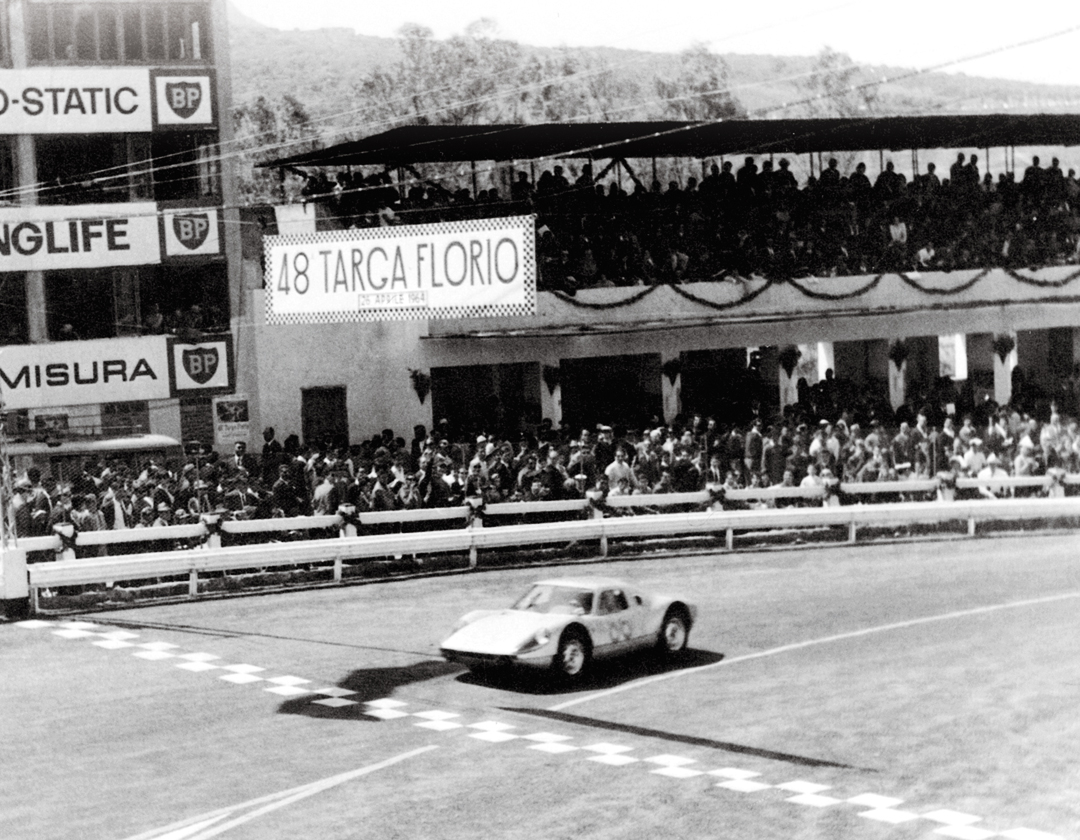
| 1964 | Colin Davis / Antonio Pucci | Porsche 904 GTS | |
| 1965 | Nino Vaccarella / Lorenzo Bandini | Ferrari 275 P2 | Vaccarella's first |
| 1966 | Willy Mairesse / Herbert Müller | Porsche 906 | Filipinetti entry |
| 1967 | Paul Hawkins / Rolf Stommelen | Porsche 910 | |
| 1968 | Vic Elford / Umberto Maglioli | Porsche 907 | From 18 minutes down |
| 1969 | Gerhard Mitter / Udo Schütz | Porsche 908/02 | |
| 1970 | Jo Siffert / Brian Redman | Porsche 908/03 | |
| 1971 | Nino Vaccarella / Toine Hezemans | Alfa Romeo 33/3 | |
| 1972 | Arturo Merzario / Sandro Munari | Ferrari 312 PB | One Ferrari against four Alfas |
| 1973 | Herbert Müller / Gijs van Lennep | Porsche 911 Carrera RSR | Last championship Targa |
| 1974 | Gérard Larrousse / Amilcare Ballestrieri | Lancia Stratos HF | |
| 1975 | Nino Vaccarella / Arturo Merzario | Alfa Romeo 33 TT12 | Vaccarella's third |
| 1976 | “Amphicar” / Armando Floridia | Osella PA4 | |
| 1977 | Raffaele Restivo / “Apache” | Chevron B36 | Stopped after a fatal crash; the last race |
Three laps of the Grande or Medio circuit before the war, eleven of the Piccolo after it; the 1912–14 and 1948–50 races were a lap of the whole island, the 1937–40 races were run in the Favorita park in Palermo, and 1957 was a regularity event.
Alfa Romeo answered with Vittorio Jano's P2 and the two men who defined Italian racing between the wars. Achille Varzi won 1930 after his spare wheel punctured his fuel tank; his mechanic refuelled from a can on a downhill stretch, the petrol caught on the exhaust, and Varzi, unwilling to stop with Nuvolari behind him, drove the last kilometres with the car alight and the mechanic beating out the flames with his seat cushion. For 1931 a landslide forced the race back onto the old 148-kilometre Grande circuit, four laps of it, in rain. Bugatti had withdrawn; Varzi, now their driver, entered a Type 51 privately, painted it red and wore blue overalls. The papers said "Varzi against the rest." He led every lap on the road, crossed the line first to the applause of the crowd, and found he had lost: Nuvolari, started five minutes behind, had done the distance in less time. In 1932, on the new 72-kilometre Piccolo circuit that would carry the race to the end, Nuvolari asked Ferrari for the lightest mechanic he had and promised to warn the boy before the difficult corners. "He started shouting at the first bend and finished at the last one," the boy told Ferrari afterwards. "I was at the bottom of the car all the time." Antonio Brivio won 1933 by twenty minutes after Baconin Borzacchini, leading, punctured and then hit a wall at Collesano; Varzi won 1934 in rain that killed Giovanni Alloatti's Bugatti on a bridge; Brivio won 1935 for the Scuderia Ferrari with the Tipo B, the race started late to suit the Prince of Piedmont. Alfas had taken the first five places in 1933 and the first two in 1935 with six private Alfas behind, and nobody else wanted to pay to ship cars to Sicily to lose. The archive's Nuvolari, through the eyes of his friends and its driver profile are the places to read about the man who won here twice; The Brothers and Others covers the Maseratis who kept turning up.
With no entry worth the name, the 1936 race was put off until 20 December and run as two laps for one-litre cars; Lancia's Augusta took the first four places. From 1937 to 1940 the Targa left the mountains altogether for the Favorita, a five-kilometre park circuit in Palermo so narrow that overtaking was banned on a third of it, as a voiturette race that Maserati had to itself: Giovanni Severi in 1937, Giovanni Rocco in 1938 after Villoresi and Marazza crashed each other out, Luigi Villoresi in 1939 ahead of seven other Maseratis, and Villoresi again on 23 May 1940 in a 4CL, the last motor race in Europe before Italy went to war. The Fascist state had nationalised most of what the Florios had left; Vincenzo moved to Rome, was held hostage by the Germans during the war, and came back only after the regime fell. The grandstand at Cerda had been blown up and the sea front at Palermo bombed flat.
The first international race in post-war Italy was the Targa Florio of 3 April 1948, run as the Giro di Sicilia again: a thousand kilometres anticlockwise round the island through Trapani, Marsala, Agrigento, Siracusa, Catania and Messina, with works teams from Maserati, Ferrari, Cisitalia, Lancia and Alfa Romeo and 86 starters. Prince Igor Troubetzkoy had hired Clemente Biondetti to share his private Ferrari 166, and they won it, Ferrari's first victory in a major race, in a car that was a road model pressed into service because the racing one had been lent out; the local petrol wrecked the pure racers and the road car ran on it. Biondetti won again in 1949 in a downpour, and the Bornigia brothers, Alfa dealers from Rome, in 1950, the year a 57-year-old Nuvolari started his last major race in a 1.1-litre Cisitalia-Abarth, lost his headlights, followed another car's lamps through the dark, tried to pass it and crashed.
From 1951 the Targa and the Giro separated for good and the race settled onto the Piccolo Madonie: eight laps, 576 kilometres, each lap forty minutes for the fastest and over an hour for the slowest. Franco Cortese won that first one in a privately entered Frazer Nash, a British car with a BMW 328 engine, after Giovanni Bracco had broken his own Ferrari, taken over his team-mate's and driven back to second. Then came Lancia, with Jano as technical director again: Felice Bonetto's Aurelia B20 led a one-two-three in 1952; Umberto Maglioli's D20 won 1953, after Piero Taruffi, leading into the last lap, was signalled to go faster and crashed; Taruffi had his revenge in the D24 in 1954, the year Castellotti went off and Luigi Musso drove himself to exhaustion and stopped by the road for water. Lancia then left sports cars for Formula One, which bankrupted them.
The world championship came to Sicily in 1955 when the Targa replaced the cancelled Nürburgring round, and Mercedes-Benz, leaving racing at the end of the year, needed to win it to take the title from Ferrari. Alfred Neubauer brought five 300 SLRs, more than a dozen private cars, forty-five mechanics and seven trucks, and three pairs of drivers: Stirling Moss and Peter Collins, Fangio and Karl Kling, Desmond Titterington and John Fitch. The roads were not closed for practice, so the drivers learned the nine hundred corners among the carts and goats, 16,695 kilometres of it between them, and for the first time Mercedes used radio to link the pits to a signalling station 29 kilometres out. The race was thirteen laps, 934 kilometres.
Moss, flagged off near the back, passed everyone by the end of the first lap and broke the lap record by two and a half minutes. On the fourth lap, leaving a right-hander in the mountains, he lost the car on mud and went off the edge of the road. "For one terrifying moment I hadn't a clue whether we were flying over a drop of three feet or three hundred," he wrote later; it was ten or twelve, into a sloping field. Locals pushed him back onto the road twelve minutes down. Collins took over, drove straight up a stone wall with the front wheels spinning in the air, reversed off it, and got the car back to the front; Moss finished the job. Mercedes won, took the championship and withdrew from racing. "Despite Stirling's efforts and my own to write the machine off," Collins said. Moss and the 300 SLR is the archive's account of the car; the story of Rudolf Uhlenhaut is the man who built it, and John Fitch's is the third driver.
The year after Mercedes left, Porsche arrived. Umberto Maglioli drove a 1.5-litre 550A Spyder the whole 576 kilometres alone, seven hours and fifty-five minutes of it, and won by a quarter of an hour over cars with twice the engine: the first time a small-capacity car had won a major race outright, and Porsche's first outright win anywhere that mattered. Eleven of the twenty-two Targa Florios still to come, that one included, would be Porsche's. In 1957, with the Mille Miglia disaster a month old and pressure to cancel, the race was run as a regularity test and "won" by a Fiat 600. Real racing returned in 1958, with single-driver entries banned and the race lengthened to fourteen laps, and went to Luigi Musso and Olivier Gendebien in a Ferrari Testa Rossa.
Vincenzo Florio died on 6 January 1959, aged 75, having made his wife promise the Targa would not die with him; Donna Lucia became president of the race. In May only Ferrari and Porsche came. Jean Behra rolled his Testa Rossa into a field, had the peasants right it, drove it back to the pits and handed it to Tony Brooks, who suggested throwing it on the scrap heap and was sent out in it anyway; the little Porsche RSK of Edgar Barth, an East German who had crossed over two years before, and Wolfgang Seidel won when the faster Porsches broke. Dan Gurney, the new boy from America, learned the course that year in the team hack with Cliff Allison beside him and a corner Mike Hawthorn had named "back to England in a box"; the archive has his 1964 return in a Cobra. In 1960 Jo Bonnier and Hans Herrmann won in the RS60 after Maglioli and a local schoolmaster named Nino Vaccarella had led in a Maserati Birdcage until a stone holed its tank; Herrmann, having also driven the third-placed car, finished first and third. In 1961 Moss led for Porsche in a car he called nearly perfect for the Targa until the differential broke eight kilometres from home, and Wolfgang von Trips and Gendebien won in Ferrari's little mid-engined Dino 246 SP; the same car won in 1962 with Willy Mairesse, Ricardo Rodríguez and Gendebien, the Belgian's third. 1963 was decided in a thunderstorm on the last lap: Mairesse, leading, hit a wall, dragged his loose engine cover to the line, and was beaten by twelve seconds by Bonnier and Carlo Abate's Porsche; 28 of 55 starters finished. In 1964 Enzo Ferrari stayed away to save his cars for Le Mans, Carroll Shelby brought four Cobras instead, and the 904 of the Palermo baron Antonio Pucci and Colin Davis beat them all, Gurney finishing eighth with his rear wheels pointing different ways after his pit crew had packed up and gone home.
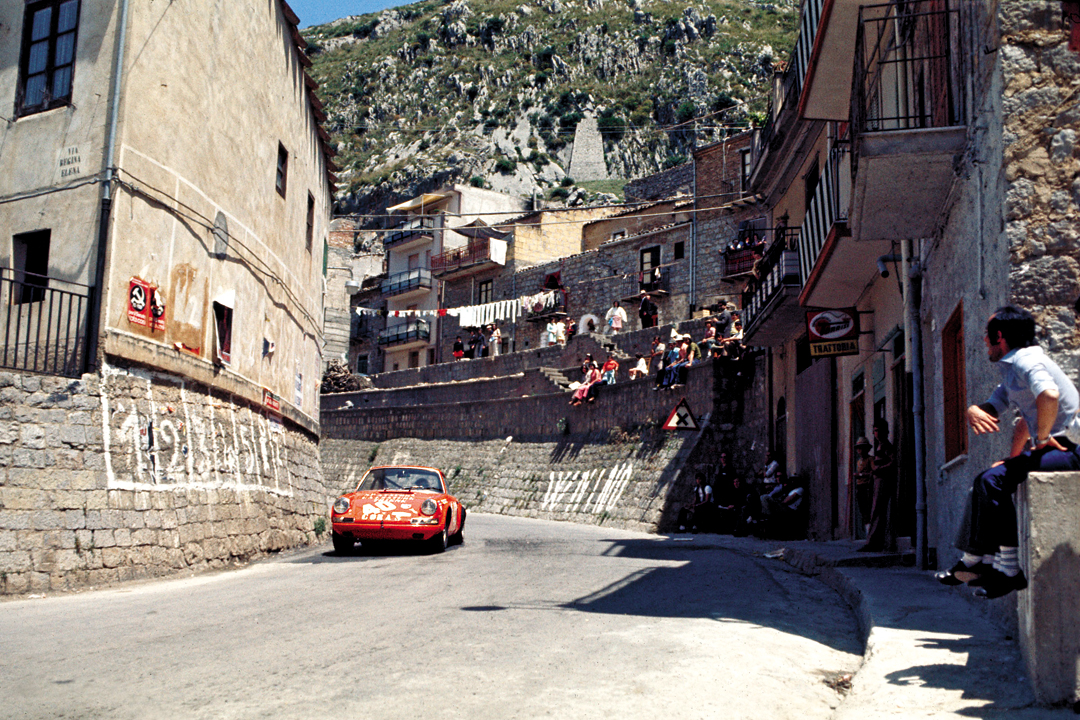
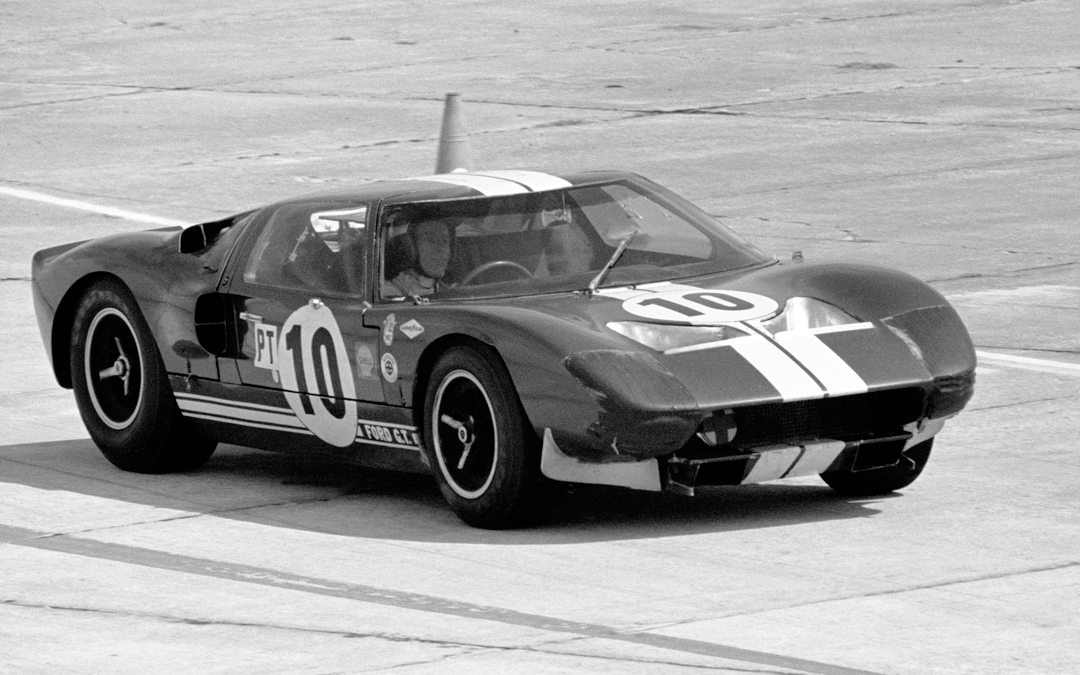
Nino Vaccarella was born in Palermo in 1933, grew up near the circuit, entered a Fiat 1100 in a hillclimb in 1956 and finished 109th in his first Targa a year later. He taught at a school he had founded, and before each race he practised for a month or two on the open roads in his own car; "he knew the roads like the back of his hand," Vic Elford said. On 9 May 1965, with Ferrari back in force and Ford's open prototype among the fifty-nine starters, he and Lorenzo Bandini won in a 275 P2 from two Porsche 904s, and the island went mad. From then on, in the days before the race, "VV NINO" appeared in paint on every second stone wall of the Madonie. Pete Lyons, who first rode down to the Targa from England on a 350 cc Norton in 1962 and was shown off a farmer's field by a shotgun on the way, wrote the archive's VV Nino about what the race was like to watch: legs swinging from the walls over the drivers' helmets, strolling on the circuit until you heard the next car, the twelve-cylinder Alfas and Ferraris held flat in fifth for the whole four miles of the Campofelice straight until the note was lost among the birds in the lemon trees. Phil Hill, then world champion, stopped on a Palermo pavement one night to tell two strangers how his throttle had stuck and put him over the edge "into a bean field"; that is in Remembering a Champion.
Porsche took the next five. Mairesse and Herbert Müller's Filipinetti 906 won the wet fiftieth race in 1966 after every works car broke. Paul Hawkins and Rolf Stommelen's 910 led a Porsche one-two-three in 1967, the year Vaccarella put the only Ferrari into a wall on the first lap and the winged Chaparral 2F came from another planet to run fourth until its gearbox failed. In 1968 Vic Elford, climbing out of Cerda on the first lap, felt the drive go, found a centre-lock nut unwinding itself, had spectators lift the 907 bodily off the ground while he tightened it, lost the nut again, punctured, limped round and changed every wheel: eighteen minutes down after two of ten laps. He then drove seven of the laps himself as nobody had driven the Madonie, took the lead on the ninth and won with Maglioli, who thus took his third Targa. Porsche, which put only cars on its victory posters, put Elford on that one. "I would never have managed it without the help of the locals," he said. Gerhard Mitter and Udo Schütz led a 908 one-two-three-four in 1969. In 1970 it rained and snowed over the weekend, the race was lengthened to eleven laps, Elford crashed twelve kilometres from the start and Maglioli went off in his Alfa, and Jo Siffert and Brian Redman won in the 908/03, the car Porsche had built specifically for this race and the Nürburgring, while Vaccarella threw the five-litre Ferrari 512 S at the mountain and damaged it in the closing laps. The pictures are in Targa Splendor.
Alfa Romeo's Autodelta came in 1971 with four Tipo 33/3s, eighty horsepower up on the Porsche 908/03s and sixty kilograms heavier, and Ferrari stayed away, Mauro Forghieri complaining that even a car that finished the Targa was seventy per cent scrap. Both Gulf Porsches crashed on the first lap, Redman's burning and leaving him with serious burns; Alain de Cadenet was knocked unconscious in his Lola and pulled from the fire by a Sicilian soldier he would only meet, through his family, forty years later. Gérard Larrousse led for Porsche until he punctured and then drove out of the pits without handing over to Elford; Vaccarella and Toine Hezemans won, Alfa's first since 1950, and the walls got a second coat. In 1972 Porsche sent nothing and Ferrari sent one 312 PB for Arturo Merzario and Sandro Munari against eight Alfa drivers. Elford led until a hole in the block sprayed him with water he took for rain; Helmut Marko, who had called the race insane and sworn never to return, set a lap record of 33 minutes 41 seconds that stands for ever; and Merzario, with stomach cramps, held him off by seventeen seconds. It was Ferrari's last sports-prototype win before the firm left sports cars for Formula One.
Before the 1973 race the FIA announced the Targa would lose its championship status: seventy-two kilometres of open mountain road could not be made safe for the cars of the seventies. Seven hundred thousand Sicilians came to what might be the last real one. Clay Regazzoni somersaulted an Alfa 33TT12 down a hillside in practice and walked away; Jacky Ickx hit a stone and Merzario's gearbox broke, putting both Ferraris out by the third lap; Andrea de Adamich's leading Alfa was sideswiped off the road by a Lancia Fulvia it was lapping. The race went to a Porsche 911 Carrera RSR, Müller and Gijs van Lennep, the last production-based car to win it, from the Lancia Stratos of Munari and Jean-Claude Andruet, which had stopped several times to fix a broken seat. The Stratos won in 1974 as a national race, Vaccarella took his third in an Alfa 33 TT12 in 1975, and an Osella won in 1976. On the fourth lap in 1977 Gabriele Ciuti's Osella left the road and killed two spectators; the race was stopped, Raffaele Restivo and "Apache" in a Chevron were declared the winners, and after sixty-one editions the Targa Florio was over as a motor race. A plan for a 6.6-kilometre closed circuit in the Madonie, "concentrating the difficulties on a reduced scale", was dropped; as one writer put it, if the Targa had to go, better it went gracefully than survived as a minor club race with the same name.
Race histories and anniversaries from the archive, newest first.
The race used five courses in seventy-one years, all of them on the same roads. The Grande Madonie of 1906 to 1911 and 1931 was 148 kilometres, out of Cerda, up through Caltavuturo and Petralia to nearly a thousand metres at Geraci Siculo, down through Castelbuono and Collesano to the coast and back along the sea to the start: three laps for 446 kilometres, nine and a half hours for the first winner. For 1912, 1913 and 1914, and again from 1948 to 1950, the race was a Giro di Sicilia, a single lap of the whole island, more than a thousand kilometres through the night. The Medio Madonie of 1919 to 1930 cut the loop to 108 kilometres by turning inland short of Petralia, and it was on this course that Boillot crossed the line backwards and Bugatti won five in a row. From 1932, and again from 1951 to the end, the Piccolo Madonie of 72 kilometres dropped the high mountain section altogether: from the pits at Floriopoli near Cerda the road climbed to Caltavuturo, crossed the hills to Collesano, dropped through its hairpins to Campofelice and ran the six-kilometre straight along the Tyrrhenian coast back to the pits, with the Bivio Polizzi, the Scillato climb and the Collesano descent as the places the race was won and lost. The Favorita park circuit in Palermo, 5.7 kilometres, held the four wartime-shadow races of 1937 to 1940 for voiturettes. The lap record on the Piccolo is Helmut Marko's 33 minutes 41 seconds in an Alfa Romeo 33TT3 in 1972, an average of 128 km/h over nine hundred corners; the grandstand at Cerda, the pits at Floriopoli and the painted walls are still there, and the Targa Florio Classica drives the lap every autumn.
The winners' list runs from the chain-driven Itala and Fiat of 1906 and 1907 to a Chevron in 1977, and it tells the story of the sports-racing car in Italy. The early Targas were won by big touring chassis, Itala, Fiat, Isotta Fraschini, SPA, SCAT and Nazzaro; Boillot's Peugeot of 1919 and Count Masetti's 1914 Grand Prix Mercedes of 1922 brought the Grand Prix car to the mountains, and Alfa Romeo's RL of 1923 gave the firm its first win and its quadrifoglio. Then came the two great runs: Bugatti's Type 35 in its 35, 35T, 35C and 35B forms, five wins from 1925 to 1929 with Costantini, Materassi and Divo, the race that made the Type 35 the most successful racing car ever built; and Alfa Romeo's P2, 8C 2300 and Tipo B, six wins from 1930 to 1935 with Varzi, Nuvolari and Brivio. Maserati's 6CM and 4CL owned the Favorita years. After the war the Giro di Sicilia went to the first Ferraris, the 166 S and 166 MM, and to an Alfa 6C 2500; the Piccolo Madonie returned with a Frazer Nash, then Lancia's Aurelia B20, D20 and D24 three years running, the 300 SLR of 1955 and the Porsche 550A that Maglioli drove alone in 1956, Porsche's first. From there the race was Porsche's against Ferrari's: the 718 RSK, RS60 and GTR, the 904, 906, 910, 907, 908/02 and 908/03, the tiny cars built for exactly this road, against the 250 TR, the 246 SP, the 275 P2 and the 312 PB; then Alfa's 33/3 and 33TT12, the 911 Carrera RSR of 1973, the last production-based winner, the Lancia Stratos, an Osella and the Chevron. The nine cars below each link to every story on the site about that car; the feed after them carries the single-car stories that mention the race.
Nine from seventy years; each links to every story on the site about that car.
Single-car stories that carry the race: Bugatti, Alfa Romeo, Maserati, Lancia, Mercedes, Ferrari and the Porsches built for the mountains.
Nino Vaccarella, the Palermo schoolmaster whose name was painted on every wall, won three times, in 1965, 1971 and 1975, and Pete Lyons's VV Nino is the portrait; Umberto Maglioli and Olivier Gendebien also won three, Maglioli's spread across Lancia, Porsche and, as Elford's co-driver, 1968. Twelve men won twice: Nazzaro and Ceirano before the first war, Masetti, Costantini and Divo in the Bugatti years, Varzi, Nuvolari and Brivio for Alfa Romeo, Villoresi at the Favorita, Biondetti in the Giros di Sicilia, Mairesse and Müller for Porsche. Around them stands most of the history of the sport: Cagno and Lancia, Boillot, Elisabeth Junek, fifth in 1928 and leading on the road for a lap, Chiron, Caracciola, Taruffi, Bonetto, Moss and Collins, Fangio and Kling, Herrmann and Bonnier, von Trips, Rodríguez, Bandini, Siffert and Redman, Stommelen, Mitter, Elford, Larrousse, Marko, Merzario, Munari, Ickx and Regazzoni. Vic Elford's 1968 drive, from eighteen minutes down after a wheel came off to the win, is the one most often called the greatest; Moss's 1955 recovery from a field, Boillot's 1919 finish and Nuvolari's 1932 are the others. The feed below gathers the profiles and interviews in the archive that carry the race's tag.
Vaccarella, Nuvolari, Elford, Moss, Hill and the men who wrote about them.
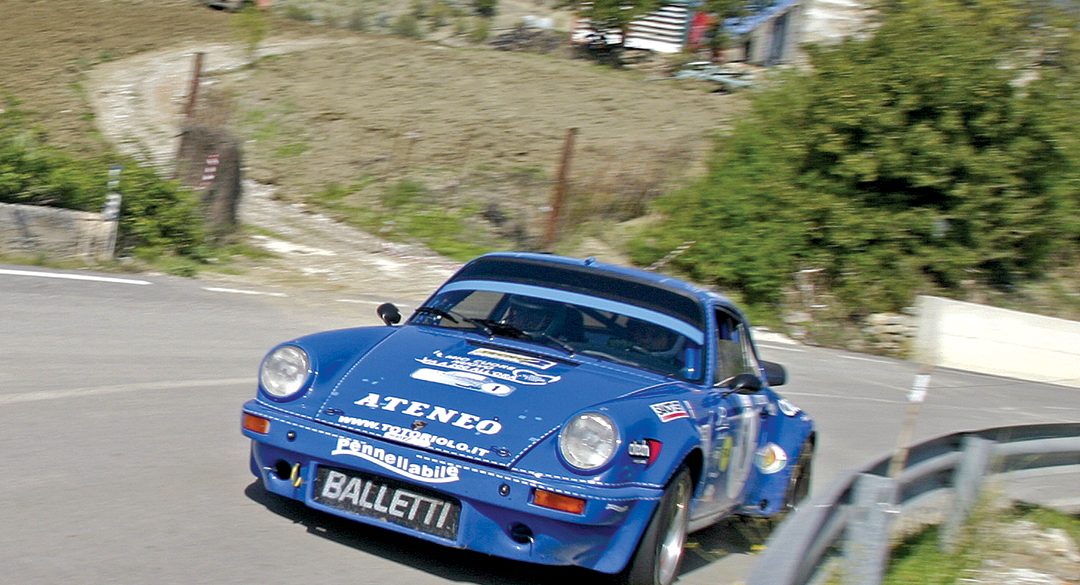
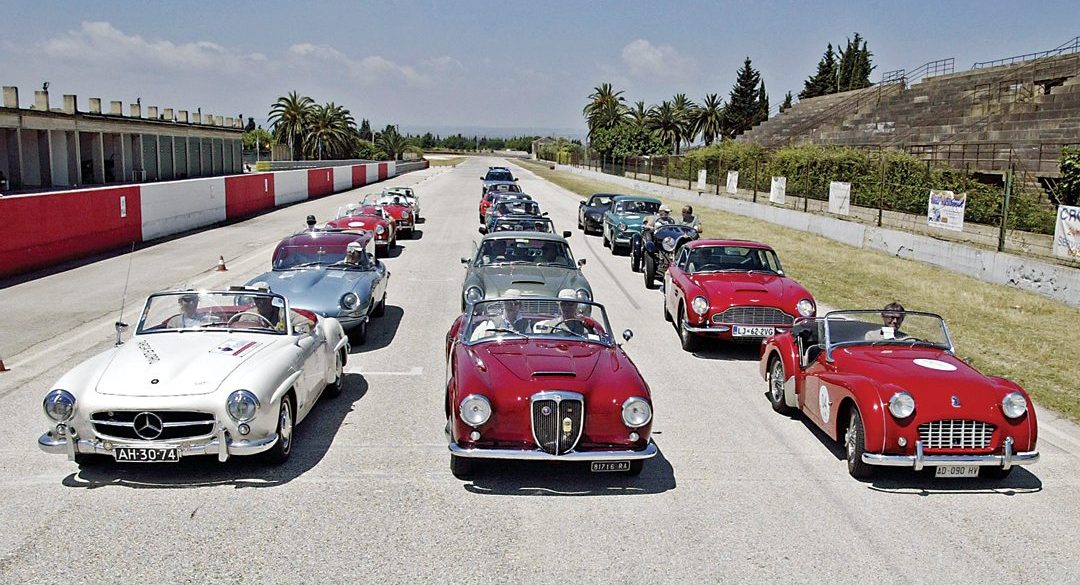
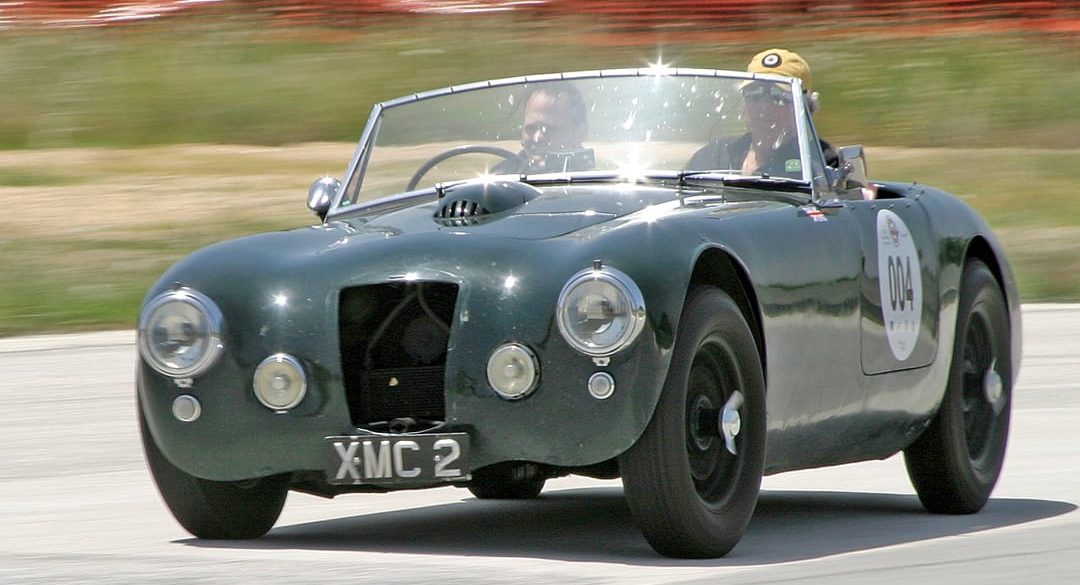
The name did not go. From 1978 the Targa Florio has been a rally, a round of the Italian championship run over the same Madonie roads, and a regularity event for historic cars, the Targa Florio Classica, starts each autumn from Palermo on routes that take in Marsala and the old circuit. The hundredth edition in 2016 ran four events in a week; the archive has 2020's Classica and 2022's, which calls the whole thing an opera. The grandstand at Cerda still stands, and the pits at Floriopoli, and the walls, with the paint faded. The cars that won come back for the parade, which is what the Fiat 8V Zagato in Sunset OttoVú and the two Italians in A Tale of Two Italians were doing when the magazine found them.
Picture galleries from the Madonie and the Classica.

Editions: 61, 1906 to 1977, none in 1915–18 and 1941–47; a championship round 1955–73. Circuits: Grande Madonie 148 km (1906–11, 1931), Giro di Sicilia c. 1,000 km (1912–14, 1948–50), Medio 108 km (1919–30), Piccolo 72 km (1932–36, 1951–77), Favorita 5.7 km (1937–40). Most wins, driver: Vaccarella, Maglioli and Gendebien 3. Most wins, marque: Porsche 11 (1956, 1959, 1960, 1963, 1964, 1966–70, 1973), Alfa Romeo 10, Ferrari 7, Bugatti and Lancia 5, Maserati 4. Longest run: Bugatti and Alfa Romeo, five and six in a row. First winner: Cagno, Itala, 1906, 9 h 32 min for 446 km at 46 km/h. Lap record: Helmut Marko, Alfa Romeo 33TT3, 33 min 41 s, 1972. Fastest race: 1972, Merzario and Munari, Ferrari 312 PB, 11 laps at 122.5 km/h. Closest finish: 1972, 16.9 seconds. Greatest recovery: Elford, 1968, from 18 minutes down. Best result by a woman: Elisabeth Junek, fifth, 1928. Biggest crowd: an estimated 700,000 in 1973. Deaths that marked it: Masetti in 1926, and the two spectators of 1977 that ended the race. Porsche's debt: the 911 Targa, named for the race in 1965. Today: the Targa Florio rally since 1978, and the Targa Florio Classica for historic cars each autumn; the hundredth edition was celebrated in 2016.
Short answers, with the long ones above.
A road race over the public mountain roads of the Madonie in Sicily, founded by Vincenzo Florio in 1906 and run until 1977, the oldest sports car race there was. Cars raced against the clock over several laps of a circuit that was, for most of its history, 72 kilometres long with about nine hundred corners.
It lost its World Championship status after 1973 because 72 kilometres of open mountain road could not be made safe for the cars of the 1970s, and in 1977 a crash on the fourth lap killed two spectators; the race was stopped and never run again as a motor race. It survives as a rally and a historic regularity event.
Nino Vaccarella, Umberto Maglioli and Olivier Gendebien each won three times. Porsche won eleven Targas, Alfa Romeo ten and Ferrari seven; Bugatti won five in a row from 1925 to 1929 and Alfa Romeo six in a row from 1930 to 1935.
148 kilometres in the first years (the Grande Madonie), 108 from 1919 (the Medio) and 72 kilometres from 1932 (the Piccolo Madonie), with around 900 corners per lap, plus three editions each as a lap of the whole island. The 1955 to 1977 races were run over the 72-kilometre course.
Porsche named its open-topped 911 of 1965 after the race, where it had won in 1956, 1959, 1960, 1963 and 1964 and would win six more times; the word is Italian for plaque, the prize Vincenzo Florio had made for the first race.
In the Madonie mountains east of Palermo, Sicily, with the start and pits at Floriopoli near Cerda and the course running through Caltavuturo, Collesano and Campofelice di Roccella and back along the Tyrrhenian coast.
As a rally, a round of the Italian championship on the Madonie roads since 1978, and as the Targa Florio Classica, a regularity event for historic cars each autumn. The original pits, grandstand and painted walls still stand.
The whole archive on one thread, newest first.