
Pete Thelander's 1934 MG NE Magnette was built red for Tazio Nuvolari to drive in that year's Ulster Tourist Trophy. Jim Richardson's size 11 feet would not fit between its pedals, so he conceded he would not be driving it.

The oldest motor race still being run started on the Isle of Man in 1905, when the mainland would not close a road for anything. It has been a touring-car race, a sports-car handicap, a GT race, a touring-car championship round and a round of the World Endurance Championship, and it has moved with the law: the Island, then Ulster, then the purpose-built circuits of England. Stirling Moss won it seven times. This is the race as the magazine covered it, from Birkin's account of Caracciola in the rain at Ards to the Goodwood Revival's annual TT Celebration.
The pieces to start with
Evans's history, Birkin on 1929, Hough on Nuvolari in 1933, the TT Sunbeam, Tazio's MG, Seaman's Aston, Moss at Dundrod and the green GTO.
The TT is the oldest motor race still run: first held on the Isle of Man in 1905 because mainland Britain banned racing on public roads, 66 editions through 2011, seven won by Stirling Moss. Art Evans traces it.
Belfast, 1929: 75 entries, Caracciola’s 7-litre supercharged Mercedes off scratch with Birkin’s blown 4½-litre Bentley, Alfas given three laps and baby Austins five, then rain. H.R.S. Birkin’s own account, including Bernard Rubin overturning “slowly but gracefully.”
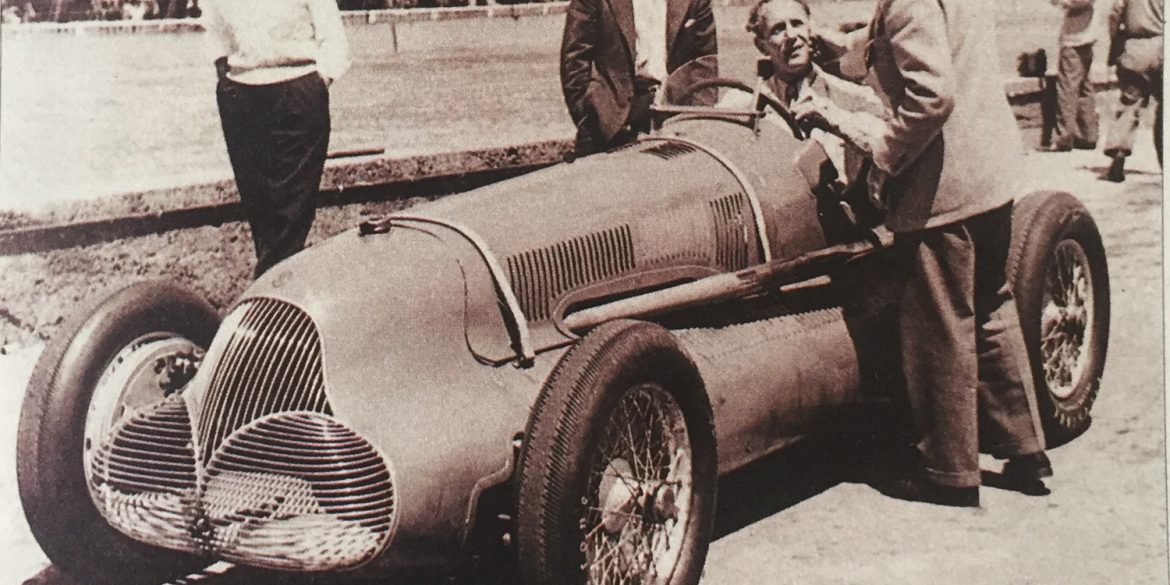
Whitney Straight persuaded Tazio Nuvolari to drive his new supercharged K3 Magnette in the 1933 Tourist Trophy. Nuvolari led from first practice, took the class lap record by seven mph and won with a dry tank. Richard Hough’s account.
STD Motors, formed in 1920 from Sunbeam, Talbot and Darracq, had Coatalen build one 3-liter racer to wear all three badges for Indianapolis and the French Grand Prix in 1921. Karl Ludvigsen on the Sunbeam that won the Tourist Trophy.
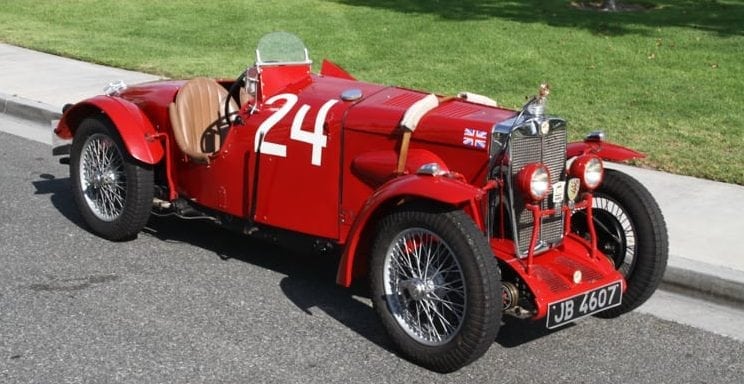
Pete Thelander’s 1934 MG NE Magnette was built red for Tazio Nuvolari to drive in that year’s Ulster Tourist Trophy. Jim Richardson’s size 11 feet would not fit between its pedals, so he conceded he would not be driving it.
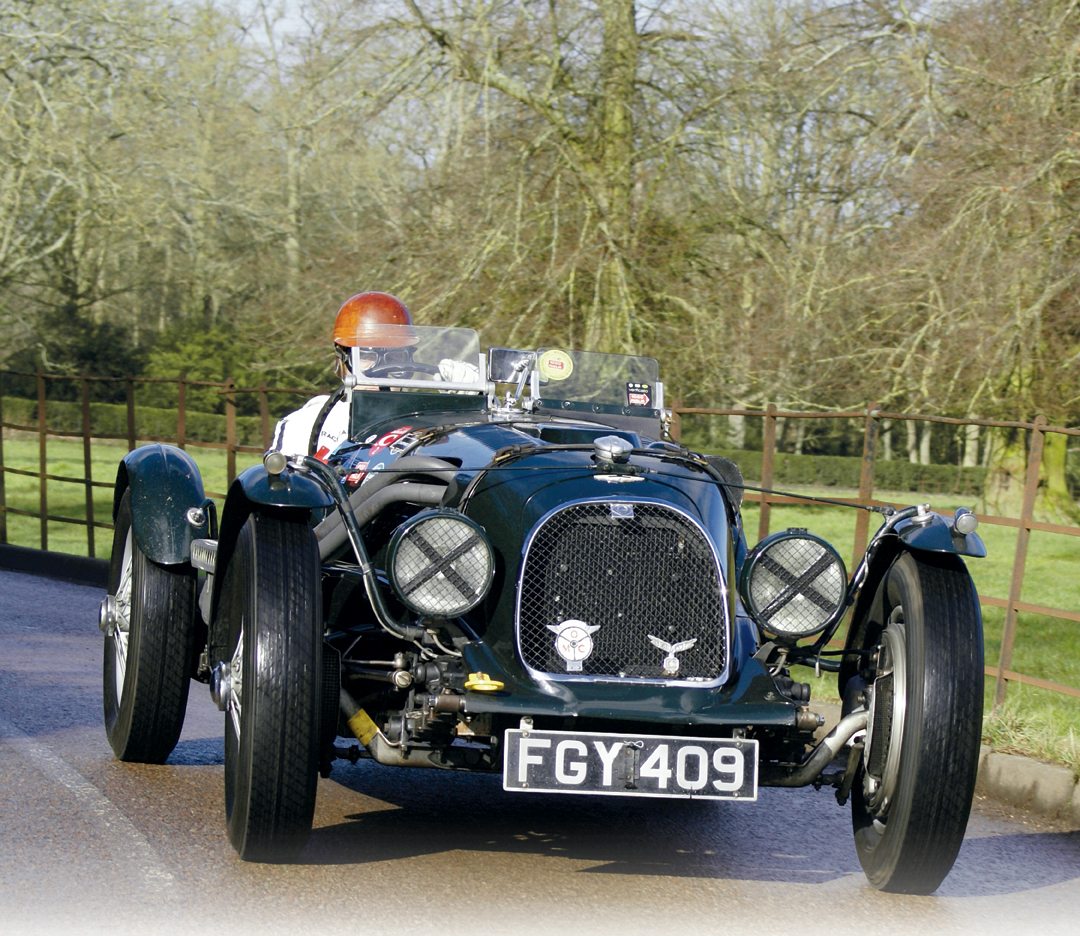
Dick Seaman led the 1936 Tourist Trophy at Ards in chassis H6/711/U until the 2-litre engine seized for want of oil. Almost 100 years to the day after Seaman’s birth, James Beckett drove the car on a February morning.
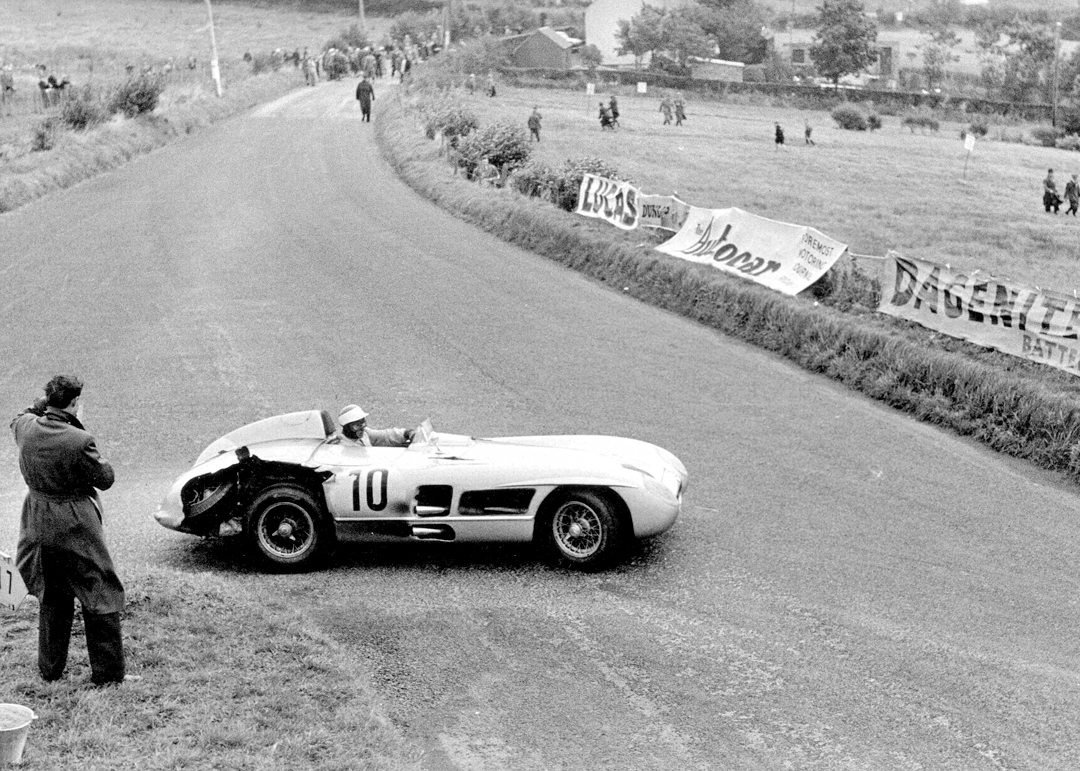
Six starts, three wins, two seconds and one withdrawal while leading. Stirling Moss on the 300 SLR: three months of Mille Miglia reconnaissance, Hockenheim tests geared for 170 mph, Jenks carsick, and Castellotti’s Ferrari going past at 175.
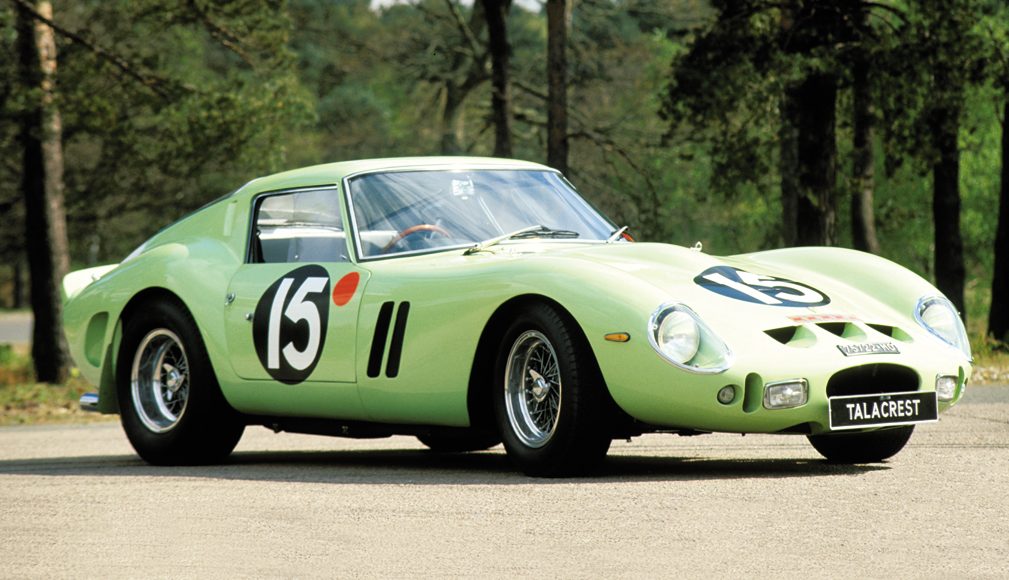
Ed McDonough promises no clichés or euphemisms, then admits the 250 GTO reduces newcomers and veterans alike to open-mouthed silence. Innes Ireland collected this one new in Italy and drove it home to Britain.
The newest long-form writing on the Tourist Trophy, as it is published.
The Tourist Trophy is the Royal Automobile Club's oldest prize and the oldest motor race still contested anywhere: first run on the Isle of Man on 14 September 1905, two years before Brooklands opened and a year before the first Grand Prix. The trophy itself, a silver figure of Mercury on a plinth, has been awarded to the winner of whichever race the RAC chooses to attach it to, and that choice has changed with the sport. It began as a race for touring cars that a buyer could order, which is where the name comes from; it became a handicap for sports cars on the public roads of Ulster between the wars, a round of the World Sportscar Championship at Dundrod in the 1950s, a Grand Touring race at Goodwood that Ferrari won five years running, a Group 7 and then a touring-car race, a British and FIA GT race, and since 2013 the prize for the Silverstone round of the World Endurance Championship.
That makes the TT the one race whose winners' list runs from Charles Rolls and Kenelm Lee Guinness through Caracciola, Nuvolari, Moss, Hawthorn, Collins, Shelby, Graham Hill, Hulme and Walkinshaw to Kristensen, McNish and Kobayashi, on eight different circuits in three countries. The archive follows most of it: the Isle of Man years through the surviving Sunbeams, Ards through Birkin's and Hough's own accounts, Dundrod through Moss, Fitch and Lofty England, Goodwood through the DBR1 and the GTO, and the modern TT Celebration through a decade of Revival reports.
The Tourist Trophy exists because Britain would not allow racing on its roads. Until Brooklands opened in 1907 there was nowhere on the mainland to race at all, but the Isle of Man made its own laws and had already closed its roads for the 1904 and 1905 eliminating trials that chose the British team for the Gordon Bennett Cup. In September 1905 the Automobile Club of Great Britain and Ireland ran its first Tourist Trophy over four laps of the 52-mile Highland course, for cars a buyer could actually order: a weight between 1,300 and 1,600 pounds, room for a driver and three passengers, and the model on sale for a month after the race. Forty-two started. Charles Rolls was the favourite and stripped his gears soon after the start; John Napier's 3.8-litre Arrol-Johnston won in six hours and nine minutes at 33.9 mph, two minutes ahead of Percy Northey's Rolls-Royce. Rolls came back and won in 1906 in a 20 hp car, and a second Rolls-Royce 20 won in 1907 in the hands of Ernest Courtis. Art Evans's history of the race carries the detail of those first years, including the 1908 "Four Inch" race, so called for its bore limit, which W. Watson won in a Hutton that was a Napier under another name.
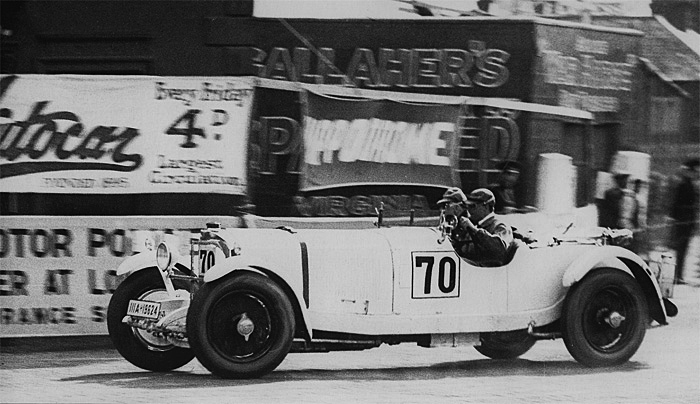
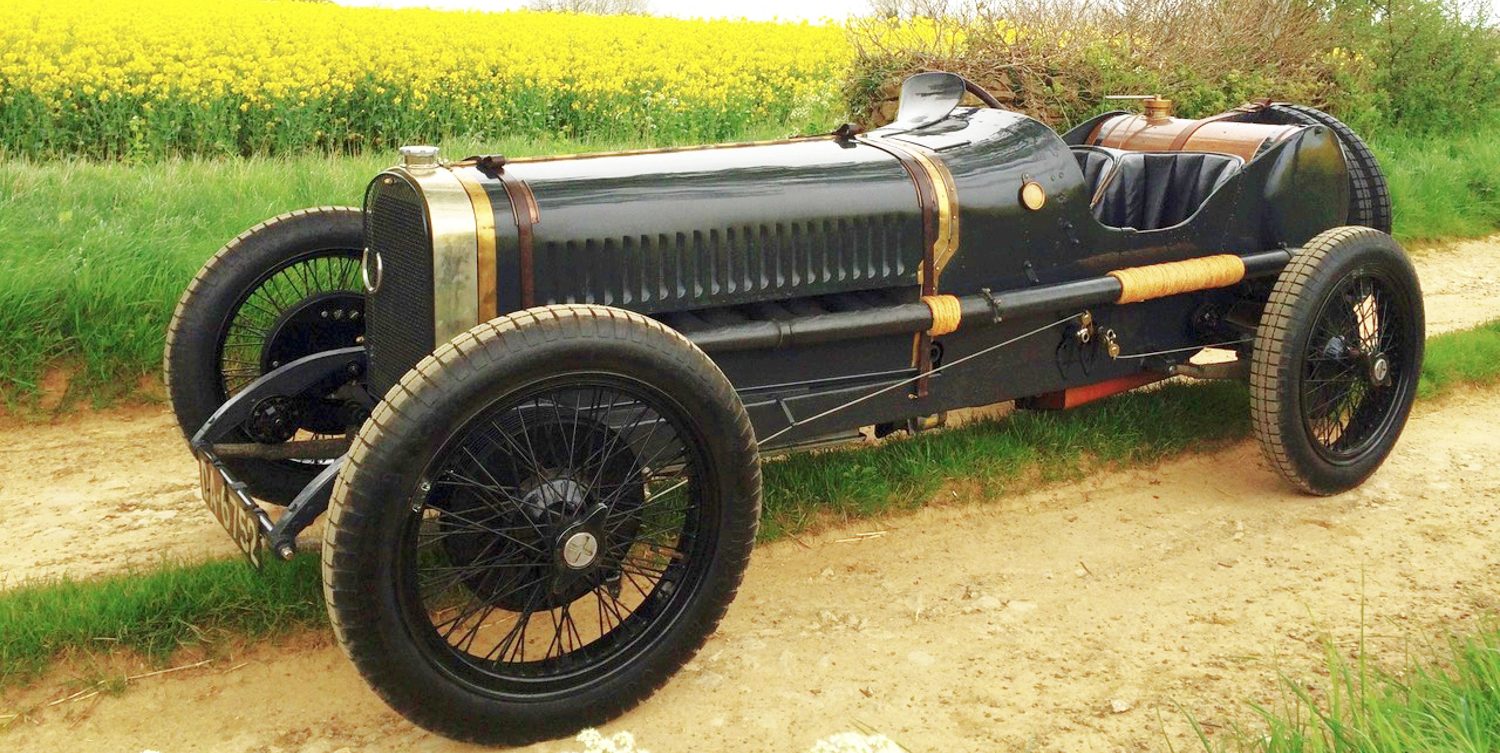
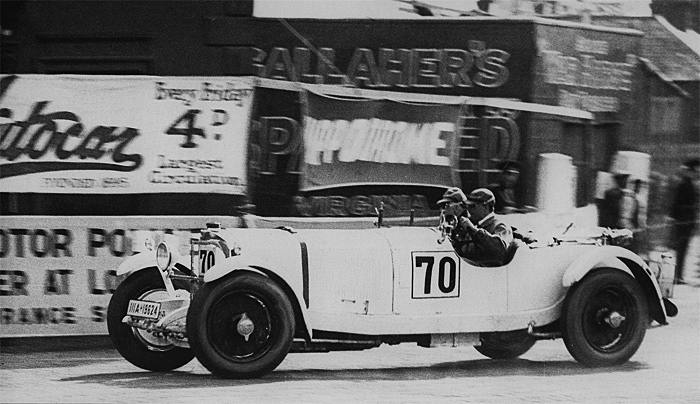
Then nothing until 1914, when the race moved to the Mountain circuit, ran over two days and paid its first prize money, £1,000 to the winner. Kenelm Lee Guinness won it for Sunbeam in a car whose twin-cam, sixteen-valve engine owed a great deal to the Peugeot that had won the 1913 Coupe de l'Auto; the surviving 1914 Sunbeam TT car, one of three works cars left, averaged 56.44 mph and took the Henry Edmunds Trophy for the fastest mountain climbs on the way. The war stopped everything, and when the race came back in 1922 the RAC opened it to the previous year's three-litre Grand Prix cars. Sunbeam rebuilt four of its 1921 straight-eights for it. Lee Guinness could not start, Segrave retired with magneto trouble, and Jean Chassagne, with a horseshoe wired to his radiator, won a five-and-a-half-hour race against new three-litre teams from Vauxhall and from W.O. Bentley. Karl Ludvigsen tells the story in Lucky Shoe; the model has been the "TT Sunbeam" ever since. It was the first Tourist Trophy won by a foreigner, and the last on the Island. There was no race again until 1928.
Northern Ireland could close its roads too, and in 1928 the RAC took the race to the Ards circuit outside Belfast: 13.6 miles of public road in an irregular triangle through Newtownards, Comber and Dundonald, thirty times round for a 410-mile race, with the field let off in classes on a handicap so that, in theory, a baby Austin had the same chance as a supercharged Mercedes. Kaye Don won the first in a Lea-Francis Hyper. Half a million people lined the roads in the good years, and the Ards TT became the biggest sporting event in Ireland and, for a decade, the most important sports car race in the British Isles.
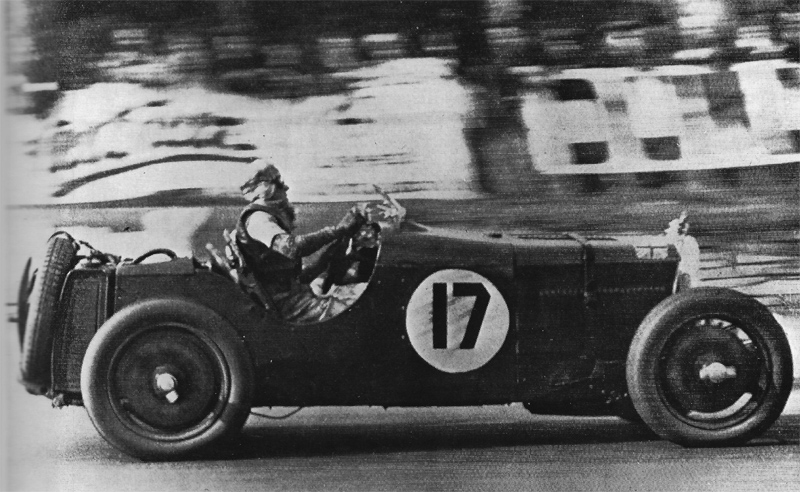
The 1929 race is the one the archive holds in a driver's own words. Tim Birkin, in a supercharged four-and-a-half-litre Bentley with W.O. himself riding as mechanic, watched Rudolf Caracciola's seven-litre SSK pass the grandstand at over 110 mph in a downpour and lap at 70 with the Austins five laps up the road. "Not for an instant did Caracciola falter," Birkin wrote in Full Throttle; the German caught the Austins on the twenty-seventh lap and Campari's Alfa Romeo on the twenty-ninth and won at 72.82 mph, with Birkin eleventh and second of the scratch men. The 1929 Tourist Trophy, by Birkin is one of the race profiles Dennis David collected for the site. Nuvolari won the next year in an Alfa Romeo 6C 1750; Norman Black's MG C-type Midget won in 1931, Cyril Whitcroft's Riley in 1932. Freddie Dixon's Rileys took 1935 and 1936, the Talbot 105 team were 1-2-3 in their class, and Dick Seaman led the 1936 race in a two-litre Aston Martin until it ran out of oil. That same afternoon a Riley left the road at Newtownards and killed eight spectators, and Ards was finished. The town unveiled a triangular memorial stone in Conway Square for the eightieth anniversary.
Every running of the race, the circuit, the winning drivers and car. Car names link to every story on the site about that car.
| Year | Circuit | Winners | Car | Notes |
|---|---|---|---|---|
| 1905 | Isle of Man, Highland course | John Napier | Arrol-Johnston | Touring cars; 42 starters, four laps of 52 miles |
| 1906 | Isle of Man, short Highland course | Charles Rolls | Rolls-Royce 20 hp | |
| 1907 | Isle of Man, short Highland course | Ernest Courtis | Rolls-Royce 20 hp | |
| 1908 | Isle of Man, Four Inch course | William Watson | Hutton (Napier) | Four-inch bore limit; Grand Prix cars |
| 1909–13 | No race | |||
| 1914 | Isle of Man, Mountain circuit | Kenelm Lee Guinness | Sunbeam | Two days; first prize money; Grand Prix cars |
| 1915–21 | No race | War | ||
| 1922 | Isle of Man, Mountain circuit | Jean Chassagne | Sunbeam | Open to 1921 three-litre GP cars; the TT Sunbeam; first foreign winner |
| 1923–27 | No race | |||
| 1928 | Ards | Kaye Don | Lea-Francis Hyper | First race on the Ulster roads; sports cars on handicap |
| 1929 | Ards | Rudolf Caracciola | Mercedes-Benz SSK | In the rain; Birkin's account |
| 1930 | Ards | Tazio Nuvolari | Alfa Romeo 6C 1750 GS | |
| 1931 | Ards | Norman Black | MG C-type Midget | |
| 1932 | Ards | Cyril Whitcroft | Riley Brooklands Nine | |
| 1933 | Ards | Tazio Nuvolari | MG K3 Magnette | Hamilton's seven-minute pit stop; 78.65 mph |
| 1934 | Ards | Charles Dodson | MG NE Magnette | |
| 1935 | Ards | Freddie Dixon | Riley TT Sprite | |
| 1936 | Ards | Freddie Dixon | Riley TT Sprite | Eight spectators killed; the last race at Ards |
| 1937 | Donington Park | Franco Comotti | Talbot-Lago T150C | |
| 1938 | Donington Park | Louis Gérard | Delage D6-70 | |
| 1939–49 | No race | War | ||
| 1950 | Dundrod | Stirling Moss | Jaguar XK120 | Moss's first major international win |
| 1951 | Dundrod | Stirling Moss | Jaguar C-type | |
| 1952 | No race | Too few entries | ||
| 1953 | Dundrod | Peter Collins / Pat Griffith | Aston Martin DB3S | First world championship round; still a handicap |
| 1954 | Dundrod | Mike Hawthorn / Maurice Trintignant | Ferrari 750 Monza | A DB-Panhard took the handicap |
| 1955 | Dundrod | Stirling Moss / John Fitch | Mercedes-Benz 300 SLR | Golden Jubilee; three drivers killed; the last race at Dundrod |
| 1956–57 | No race | No circuit | ||
| 1958 | Goodwood | Stirling Moss / Tony Brooks | Aston Martin DBR1 | Astons 1-2-3 |
| 1959 | Goodwood | Carroll Shelby / Jack Fairman / Stirling Moss | Aston Martin DBR1 | Clinched Aston Martin's world championship |
| 1960 | Goodwood | Stirling Moss | Ferrari 250 GT SWB | Now a GT race |
| 1961 | Goodwood | Stirling Moss | Ferrari 250 GT SWB | Moss's seventh |
| 1962 | Goodwood | Innes Ireland | Ferrari 250 GTO | The pale-green UDT-Laystall car |
| 1963 | Goodwood | Graham Hill | Ferrari 250 GTO | |
| 1964 | Goodwood | Graham Hill | Ferrari 330P | The last at Goodwood |
| 1965 | Oulton Park | Denny Hulme | Brabham BT8-Climax | |
| 1966 | Oulton Park | Denny Hulme | Lola T70-Chevrolet | |
| 1967 | Oulton Park | Andrea de Adamich | Alfa Romeo GTA | Touring cars for one year |
| 1968 | Oulton Park | Denny Hulme | Lola T70-Chevrolet | |
| 1969 | Oulton Park | Trevor Taylor | Lola T70-Chevrolet | |
| 1970 | Silverstone | Brian Muir | Chevrolet Camaro Z28 | European Touring Car Championship from here to 1988 |
| 1971 | No race | |||
| 1972 | Silverstone | Dieter Glemser / Jochen Mass | Ford Capri RS2600 | |
| 1973 | Silverstone | Derek Bell / Harald Ertl | BMW 3.0 CSL | |
| 1974 | Silverstone | Stuart Graham | Chevrolet Camaro Z28 | Graham: a TT winner on two wheels and four |
| 1975 | Silverstone | Stuart Graham | Chevrolet Camaro Z28 | |
| 1976 | Silverstone | Pierre Dieudonné / Hughes de Fierlandt / Jean Xhenceval | BMW 3.0 CSL | |
| 1977 | Silverstone | Dieter Quester / Tom Walkinshaw | BMW 3.0 CSL | |
| 1978 | Silverstone | Eddy Joosen / Raymond van Hove | BMW 3.0 CSL | |
| 1979 | Silverstone | Carlo Facetti / Martino Finotto | BMW 3.0 CSL | |
| 1980 | Silverstone | Umberto Grano / Harald Neger / Heribert Werginz | BMW 635 CSi | |
| 1981 | Silverstone | Tom Walkinshaw / Chuck Nicholson | Mazda RX-7 | |
| 1982 | Silverstone | Tom Walkinshaw / Chuck Nicholson | Jaguar XJ-S | |
| 1983 | Silverstone | René Metge / Steve Soper | Rover Vitesse | |
| 1984 | Silverstone | Gianfranco Brancatelli / Helmut Kelleners | BMW 635 CSi | |
| 1985 | Silverstone | Tom Walkinshaw / Win Percy | Rover Vitesse | |
| 1986 | Silverstone | Denny Hulme / Jeff Allam | Rover Vitesse | Hulme's fourth, twenty years after his first |
| 1987 | Silverstone | Enzo Calderari / Fabio Mancini | BMW M3 | World Touring Car Championship |
| 1988 | Silverstone | Andy Rouse / Alain Ferté | Ford Sierra RS500 | |
| 1989–93 | No race | |||
| 1994 | Donington Park | Paul Radisich | Ford Mondeo | FIA Touring Car World Cup |
| 1996 | Donington Park | Alain Menu | Renault Laguna | |
| 1997 | Donington Park | Alain Menu | Renault Laguna | |
| 1998 | Donington Park | Emmanuel Collard / Vincenzo Sospiri | Ferrari 333 SP | International Sports Racing Series |
| 1999–2004 | Trophy awarded to British GT champions; no single race | |||
| 2005 | Silverstone | Peter Kox / Pedro Lamy | Aston Martin DBR9 | FIA GT Championship from here to 2011 |
| 2006 | Silverstone | Michael Bartels / Andrea Bertolini | Maserati MC12 | |
| 2007 | Silverstone | Thomas Biagi / Mika Salo | Maserati MC12 | |
| 2008 | Silverstone | Karl Wendlinger / Ryan Sharp | Aston Martin DBR9 | |
| 2009 | Silverstone | Karl Wendlinger / Ryan Sharp | Saleen S7-R | |
| 2010 | Silverstone | Jamie Campbell-Walter / Warren Hughes | Nissan GT-R GT1 | Awarded after the Aston Martin was disqualified |
| 2011 | Silverstone | Michael Krumm / Lucas Luhr | Nissan GT-R GT1 | |
| 2013 | Silverstone | Allan McNish / Tom Kristensen / Loïc Duval | Audi R18 e-tron quattro | FIA WEC round from here |
| 2014 | Silverstone | Anthony Davidson / Sébastien Buemi / Nicolas Lapierre | Toyota TS040 Hybrid | |
| 2015 | Silverstone | Marcel Fässler / André Lotterer / Benoît Tréluyer | Audi R18 e-tron quattro | |
| 2016 | Silverstone | Romain Dumas / Neel Jani / Marc Lieb | Porsche 919 Hybrid | After the Audi's disqualification |
| 2017 | Silverstone | Sébastien Buemi / Anthony Davidson / Kazuki Nakajima | Toyota TS050 Hybrid | |
| 2018 | Silverstone | Mathias Beche / Thomas Laurent / Gustavo Menezes | Rebellion R13 | Both Toyotas disqualified |
| 2019 | Silverstone | Mike Conway / Kamui Kobayashi / José María López | Toyota TS050 Hybrid | The most recent running |
The 1914 Sunbeam was Lee Guinness's; the 1922 car Chassagne's TT Sunbeam. 1928–55 were handicap races: the winner on the road is the winner listed. 1999–2004 the trophy went to the British GT champions and no single race carried it.
Richard Hough's account of the 1933 race, Sensation at Ards, is the best single piece of writing about the Tourist Trophy on the site. Whitney Straight persuaded Tazio Nuvolari to drive his supercharged 1,100-cc MG K3 Magnette; the Italian had never seen the car or its Wilson preselector gearbox before practice, spoke no English, and by half past eleven on the first morning knew as much about it as anyone. He went through eight sets of tyres in practice and two in the race. His rival was the wild Irishman Hugh Hamilton in a J4 Midget, who threw the race away at a pit stop that took nearly seven minutes while his mechanic set fire to his own gloves; Nuvolari's stop, with Alec Hounslow beside him and no practice, took three minutes nine seconds. The engine cut on the last lap, Hounslow switched to the reserve tank, and Nuvolari won by forty seconds at 78.65 mph, a record for the circuit, with the Mille Miglia and Le Mans already his that year. The K3 he drove is the most famous MG there is. Revisiting Tazio's TT follows the red NE Magnette built for him to drive in 1934; he did not, and Charles Dodson won in a sister car.
With Ulster closed to it the race went to Donington Park, the first permanent road circuit on the mainland, which in fewer than seven seasons had grown from a motorcycle track into a venue the RAC and the BRDC trusted with their biggest events; Joon Lim's Donington Park – The Pioneers is the history of how. Franco Comotti won the 1937 TT in a Talbot-Lago T150C and Louis Gérard the 1938 race in a Delage D6-70, the subject of The Adventures of Louis Gerard. Then another war, and another eleven-year gap.
Ulster took the race back in 1950 on the Dundrod circuit, seven and a half miles of narrow, banked, twisting public road in the hills above Belfast, the only true road course the RAC could find. "One can be pretty sure of bad weather," Jaguar's Lofty England said of it, "which is not much fun for the competitors, and much less fun for the spectators." In that first wet race a 20-year-old Stirling Moss, in a lightweight XK120 built by England's men and entered by Tommy Wisdom, scored his first major international win; Robert Newman's portrait of Lofty England has the picture. Moss won again in 1951 in the C-type, one of the few races the car won outside Le Mans, as Ed McDonough notes in The Cat's Cradle. The 1952 race was called off for lack of entries. From 1953 the TT was a round of the new World Sportscar Championship, though still run as a handicap, which the continental teams disliked; Peter Collins and Pat Griffith won for Aston Martin in a DB3S, as Mike Lawrence recounts in The 1953 Championship, and in 1954 Mike Hawthorn and Maurice Trintignant's Ferrari 750 Monza took the race while a 750-cc DB-Panhard took the handicap.
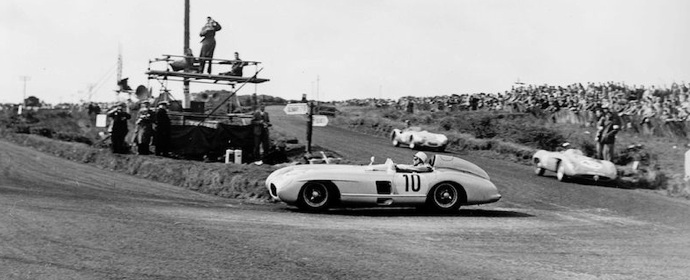
1955 was the Golden Jubilee race and one of the deciders of the championship, with Ferrari, Mercedes-Benz, Jaguar and Porsche all there and Fangio, Moss, Hawthorn, Kling and Fitch in the cars. It was also, four months after Le Mans, another terrible day: Jim Mayers and Bill Smith were killed in a second-lap crash and Richard Mainwaring later when his Elva overturned. Moss, sharing a 300 SLR with John Fitch, clipped a hedge while a minute and a half in front, tore the tread off a tyre and the wing off the car, handed over to Fitch for a stint and took it back to win when Hawthorn's D-type blew its engine with two laps to go. Moss tells it himself in Moss and the 300 SLR, Fitch's part is in his tribute, and John Grant, who cycled the course as a boy and was there, remembers it in his interview. Mercedes finished 1-2-3, Fangio and Kling second, von Trips and Simon third, and took the championship at the Targa Florio a month later; the Tourist Trophy never went back to Dundrod, and no car race has been held on the circuit since, though the motorcycle Ulster Grand Prix used it for decades afterwards. Mike Jiggle's Rain on the TT Parade covers the 2008 parade that closed the roads once more for the cars of those six years.
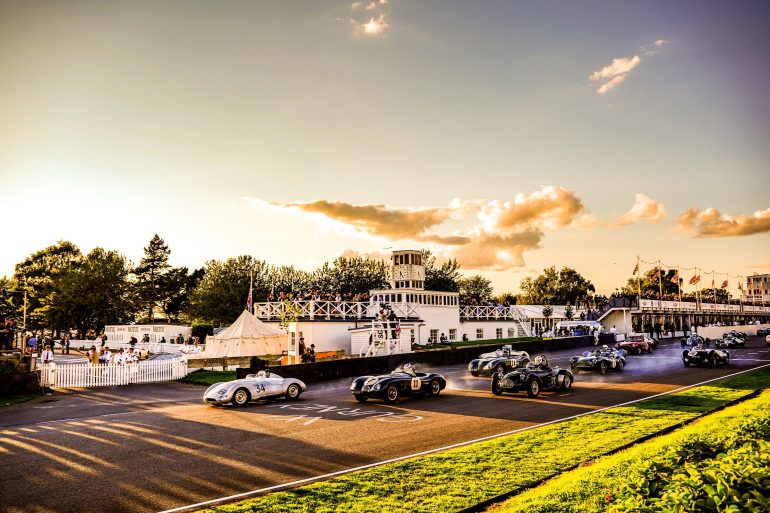
After two blank years the race settled at Goodwood, on an airfield circuit, and the Aston Martin era began. In 1958 three DBR1s came and finished 1-2-3, Moss and Brooks leading almost throughout, with Shelby and Lewis-Evans third; in 1959 Shelby, Fairman and Moss shared the winning DBR1/2 with an on-board jacking system to speed the stops, and the win clinched Aston Martin's world championship. Ed McDonough's A Le Mans Legend is the life of that chassis, and Karl Ludvigsen's The Aston Martin that Made Good the story of the engine. From 1960 the TT was a GT race. Moss won it twice more in Rob Walker's Ferrari 250 GT SWB, for his sixth and seventh Tourist Trophies, and the 250 GTO won the next two: Innes Ireland in 1962 in the pale-green UDT-Laystall car that is the subject of Green with Envy, and Graham Hill in 1963. Hill won again in 1964 in a 330P, the last Tourist Trophy at Goodwood. The circuit closed to racing two years later; when it reopened for the Revival in 1998 the RAC TT Celebration, for the closed-cockpit GTs of 1960 to 1964, became its headline race.
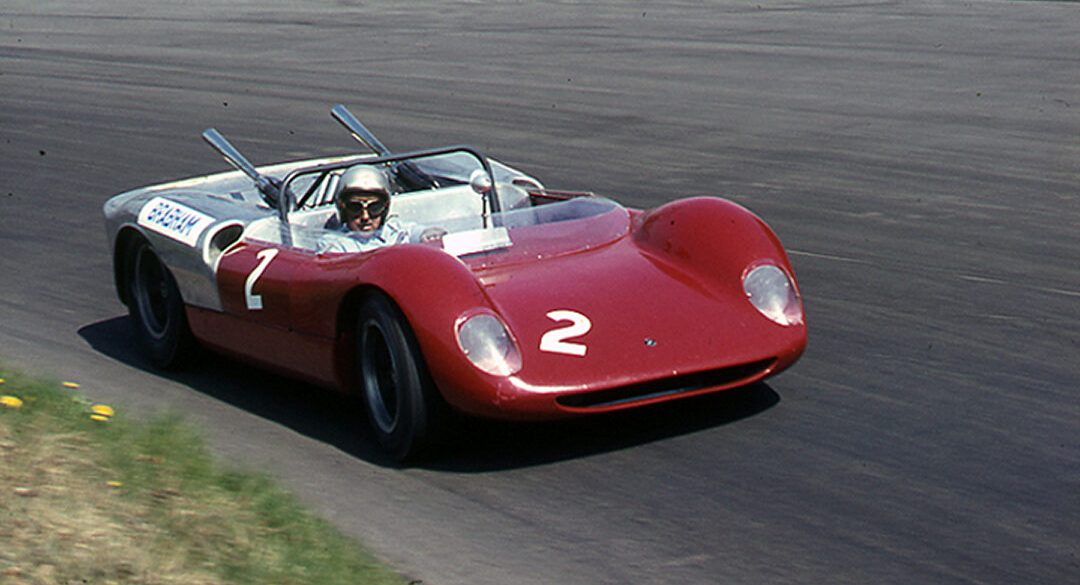
The race moved to Oulton Park and became a Group 7 sports-car race for a few years: Denny Hulme won three of the five in a Brabham BT8 and two Lola T70s, Trevor Taylor the last in another T70, and in 1967 it was a touring-car race for one year, won by Andrea de Adamich's Alfa Romeo GTA. The Klemantaski Collection's picture of the 1966 race shows Jack Brabham in the one-off 4.3-litre Repco-engined BT17. From 1970 the Tourist Trophy was a round of the European Touring Car Championship at Silverstone, and for nineteen years the winners were saloons: Brian Muir's Camaro, Glemser and Mass in a Capri RS2600, five BMW 3.0 CSL wins, Tom Walkinshaw four times, with Quester in a CSL, with Chuck Nicholson in a Mazda RX-7 and a Jaguar XJ-S and with Win Percy in a Rover Vitesse, Hulme once more in 1986 in another Rover, and Andy Rouse and Alain Ferté in a Sierra RS500 in 1988.
Accounts of the races, from the Island to the Revival's TT Celebration, newest first.
Eight circuits have held the race, and the list is a history of where Britain was allowed to go motor racing. The Isle of Man's Highland course of 1905 was 52 miles of public road from Douglas over the mountain and back by Peel and Kirk Michael, cut to 40 miles for 1906 and 1907, replaced by the 37-mile Four Inch course of 1908 and then by the 37.75-mile Mountain circuit of 1914 and 1922, the same roads the motorcycle TT still uses. Ards, 1928 to 1936, was 13.6 miles of ordinary road round a triangle of Ulster villages, flat out through Dundonald, hairpinned through Comber and narrow through the streets of Newtownards, the fastest road circuit in the British Isles and the one with the largest crowds. Donington Park, 1937 and 1938, was the first mainland road circuit, just over three miles of parkland through the Melbourne hairpin and the Craner Curves, built on a private estate and so exempt from the law. Dundrod, 1950 to 1955, was 7.4 miles of narrow public road in the hills above Belfast, lined by banks and hedges, with the long climb from the hairpin to Deer's Leap and no run-off anywhere; it is still there and still closed each August for motorcycles. Goodwood, 1958 to 1964, was the 2.4-mile perimeter track of a wartime airfield in Sussex, fast and open, with the Lavant Straight and the chicane. Oulton Park, 1965 to 1969, was 2.8 miles of Cheshire parkland. Silverstone, the airfield that became the home of British racing, held the TT from 1970 to 1988 on its 2.9-mile Grand Prix circuit, and holds it again, on the modern 3.66-mile layout, as the World Endurance Championship round. Only the Island, Dundrod and Goodwood can be driven today as they were raced.
No driver is tied to the race as Moss is. His first Tourist Trophy, at Dundrod in 1950, the day before his 21st birthday, in the rain, in Tommy Wisdom's Jaguar XK120, was the win that made him; Jaguar signed him for 1951 on the strength of it and he won again in the C-type. The 1955 win with Fitch in the 300 SLR, three wheels and a torn wing, was the drive he rated with the Mille Miglia of the same year. At Goodwood he won in 1958 with Brooks and 1959 with Shelby and Fairman in the works DBR1s, the second clinching the championship for Aston Martin, and in 1960 and 1961 alone in Rob Walker's dark-blue 250 GT SWB, driving with the radio on. Seven wins in twelve years, in four different makes, on two circuits, in sports cars and GTs; the next most successful drivers, Hulme and Walkinshaw, have four each, both in the touring-car and Group 7 years. Dennis David's profile and Moss's own account of the 300 SLR are the places to start; the People feed below gathers the rest of the archive on him.
The winners' list is a catalogue of the British sports car and its rivals. The Arrol-Johnston and the two Rolls-Royce 20s of the first years were touring cars with the hoods still on; the TT Sunbeams of 1914 and 1922 were Grand Prix cars in all but name, and three of them survive. Ards was the age of the handicap, so its winners were small: Lea-Francis, Riley, MG's C-type, K3 and NE Magnettes, with the big cars, Birkin's blower Bentley, Caracciola's SSK, the Talbot 105s and the Alfa Romeo 8Cs, chasing them on scratch. Dundrod brought the works sports-racers: the lightweight XK120 and the C-type, the DB3S, the 750 Monza, the D-type and the 300 SLR. Goodwood was the DBR1's and then Ferrari's: the 250 GT SWB and the 250 GTO, which won the race four years running between them, and the 330P. Oulton Park had the Group 7 cars, the Brabham BT8 and the Lola T70; Silverstone the touring cars, Camaro, Capri, the 3.0 CSL that won five, the Rover Vitesse, the XJ-S and the Sierra RS500; and the modern race the DBR9, the MC12, the GT-R and the hybrid prototypes from Audi, Toyota and Porsche. The nine cars below each link to every story on the site about that car; the feed after them carries the single-car stories that mention the race.
Nine from eight circuits and a century; each links to every story on the site about that car.
Single-car stories that carry the race: the Sunbeams and the K3, the C-type and the SLR, the DBR1s, the GTOs and the touring cars.


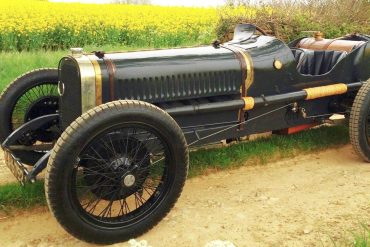


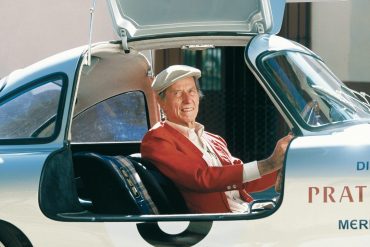
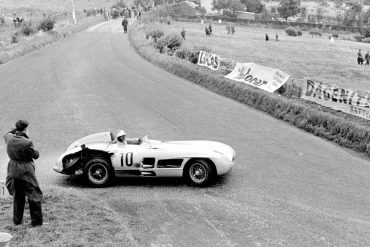
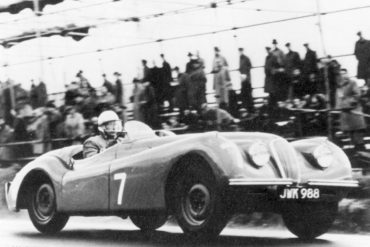


Because the race has been so many kinds of race, its drivers come from every corner of the sport. The pioneers: Rolls, Napier, Lee Guinness, Chassagne and Segrave. The Ards men: Kaye Don, Birkin, Caracciola, Campari, Nuvolari, Hamilton, Dodson, Dixon, Seaman and the Riley and MG teams. The Dundrod generation, which was also the first World Sportscar Championship's: Moss, Collins, Hawthorn, Trintignant, Fangio, Kling, Fitch and von Trips, with Lofty England, John Wyer and Alfred Neubauer in the pits. Goodwood's: Moss again, Brooks, Shelby, Fairman, Salvadori, Ireland, Graham Hill, Surtees and Parkes. The Oulton and Silverstone years: Hulme, Brabham, Taylor, de Adamich, Muir, Mass, Bell, Quester, Walkinshaw, Nicholson, Percy, Soper, Rouse. And the modern list: Kox and Lamy, Bertolini, Wendlinger, Krumm, Kristensen, McNish, Duval, Lotterer, Buemi, Davidson, Kobayashi. Robert Newman's portraits carry many of them; the feed below gathers the profiles and interviews that carry the race's tag.
Drivers, team managers and the people who were there, from Birkin to Walkinshaw.
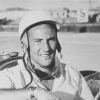
After a gap the RAC gave its trophy to the touring-car races at Donington in the 1990s, then to the Silverstone round of the FIA GT Championship from 2005 to 2011, where Aston Martin, Maserati, Saleen and Nissan won it. Since 2013 it has gone to the overall winners of the Silverstone round of the FIA World Endurance Championship: Audi, Toyota, Porsche and Rebellion, the last running in 2019. The name lives most visibly at Goodwood each September, where the RAC TT Celebration, an hour-long two-driver race for the closed-cockpit GTs of 1960 to 1964, is the headline race of the Revival and the most valuable grid in historic racing: GTOs, Cobras, lightweight E-types, DB4 GT Zagatos and Grand Sports. Sports Car Digest covered it for a decade: the 2011 race won by Kristensen and Brack in a Shelby Daytona Coupe, 2012, the galleries of 2013, 2014 and 2015, when a pack of Cobras chased a lightweight E-type for an hour, and the 2016 and 2017 races. Motor Racing Legends added a three-hour RAC Tourist Trophy for pre-1966 cars at Silverstone in 2020. The old roads are still there too: Ards has its stone, and the seven and a half miles of Dundrod where Moss, Hawthorn, Fitch and Fangio raced for the trophy are the same banked lanes they were in the 1950s.
First race: 14 September 1905, Isle of Man, won by John Napier's Arrol-Johnston at 33.9 mph over 208 miles. Most recent: Silverstone, 2019, Toyota TS050 Hybrid. Circuits: eight, in three countries, from 52 miles of public road to a 2.4-mile airfield. Most wins, driver: Stirling Moss, seven (1950, 1951, 1955, 1958, 1959, 1960, 1961); Denny Hulme and Tom Walkinshaw four each; Nuvolari, Dixon, Graham Hill, Stuart Graham, Alain Menu, Wendlinger and Sharp two. Most wins, marque: BMW eight, all in the touring-car years; Ferrari seven, six of them from 1954 to 1964; Aston Martin five; Jaguar, MG, Riley, Lola, Rover, Chevrolet and Toyota three. Longest race: 1914, sixteen laps of the Mountain circuit, 600 miles over two days; the Ards races were 410 miles. Fastest Ards race: Nuvolari, 1933, 78.65 mph. Biggest crowd: Ards, half a million by contemporary estimates. Worst days: Ards 1936, eight spectators killed; Dundrod 1955, three drivers killed. Longest gaps: 1909 to 1913, 1923 to 1927, 1939 to 1949, 1999 to 2004 (no single race). Handicap years: 1928 to 1955. Championship status: World Sportscar Championship 1953 to 1955 and 1958 to 1959, the GT championship 1960 to 1964; European Touring Car Championship 1970 to 1988; FIA GT 2005 to 2011; FIA WEC since 2013. The Goodwood TT Celebration: every Revival since 1998, for closed-cockpit GTs of 1960 to 1964.
Short answers, with the long ones above.
The Royal Automobile Club's prize for a race it has attached to different events since 1905: touring cars on the Isle of Man, sports cars at Ards and Dundrod, GTs at Goodwood, touring cars at Silverstone, and since 2013 the Silverstone round of the World Endurance Championship. It is the oldest motor race still being run.
On eight circuits: the Isle of Man (1905–1908, 1914, 1922), Ards in Northern Ireland (1928–1936), Donington Park (1937–1938, 1990s), Dundrod in Northern Ireland (1950–1955), Goodwood (1958–1964), Oulton Park (1965–1969) and Silverstone (1970–1988, 2005–2011, 2013–2019).
Stirling Moss, seven times between 1950 and 1961, in a Jaguar XK120 and C-type, a Mercedes-Benz 300 SLR, two Aston Martin DBR1s and a Ferrari 250 GT SWB. Denny Hulme and Tom Walkinshaw won four each.
They share a name and a birthplace. The car race began on the Isle of Man in 1905 and left after 1922; the motorcycle Tourist Trophy began there in 1907 and has stayed. This page is about the car race.
In the 1936 race a car crashed into the crowd at Newtownards and killed eight spectators. The Northern Ireland authorities would not close the Ards roads again, and the race moved to Donington Park.
An hour-long, two-driver race at the Goodwood Revival each September for the closed-cockpit GT cars that contested the Tourist Trophy at Goodwood from 1960 to 1964: Ferrari 250 GTOs, Cobras, lightweight E-types, Aston Martin DB4 GTs and Corvette Grand Sports. It has been the Revival's headline race since 1998.
The RAC awards it to the winners of the Silverstone round of the FIA World Endurance Championship, last run in 2019, and Goodwood's TT Celebration carries the name every year.
The whole thread, newest first.